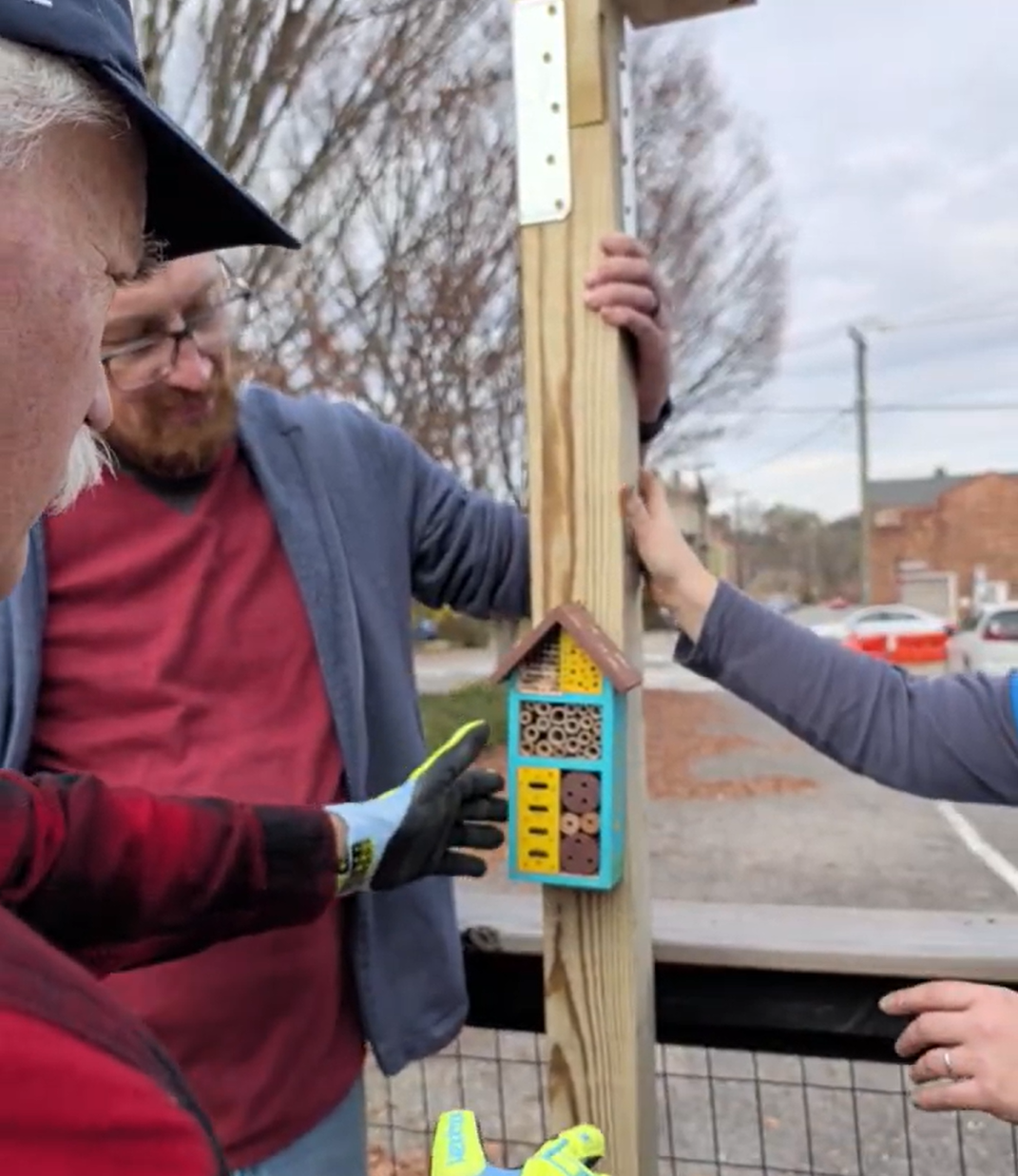
Many hands came together for the installation of a Native Plant Garden at the Appomattox River Center in Petersburg. Pictured: a “habitat pole” going into the new garden space.
New Native Plant Garden at the Appomattox River Center
By Elise Neuscheler, Environmental Stewardship Manager
The team at FOLAR is excited to have our brand new Native Plant Garden at the Appomattox River Center. The project has been a gradual step-by-step rehabilitation of the outdoor space at our building, the Appomattox River Center, located near Old Town Petersburg and the Petersburg Main Branch Library. When FOLAR arrived, the fenced-off corner of the space had rotted-out raised beds, lots of degraded weed barrier fabric, and some remnant herbs mixed in with plenty of weeds. As of last Saturday, the freshly-mulched garden has four large heavy-duty aluminum raised beds – donated from their previous use as frames for skylights – filled up with native plants, as well as several in-ground shrubs and small trees. With the installation of a compost bin, a “habitat pole,” and a bench, we’re excited for the future in this space; a place for learning, relaxing, and even shelter for Petersburg’s critters and cuties. I’d like to tell a story through photos of all that went into this project!
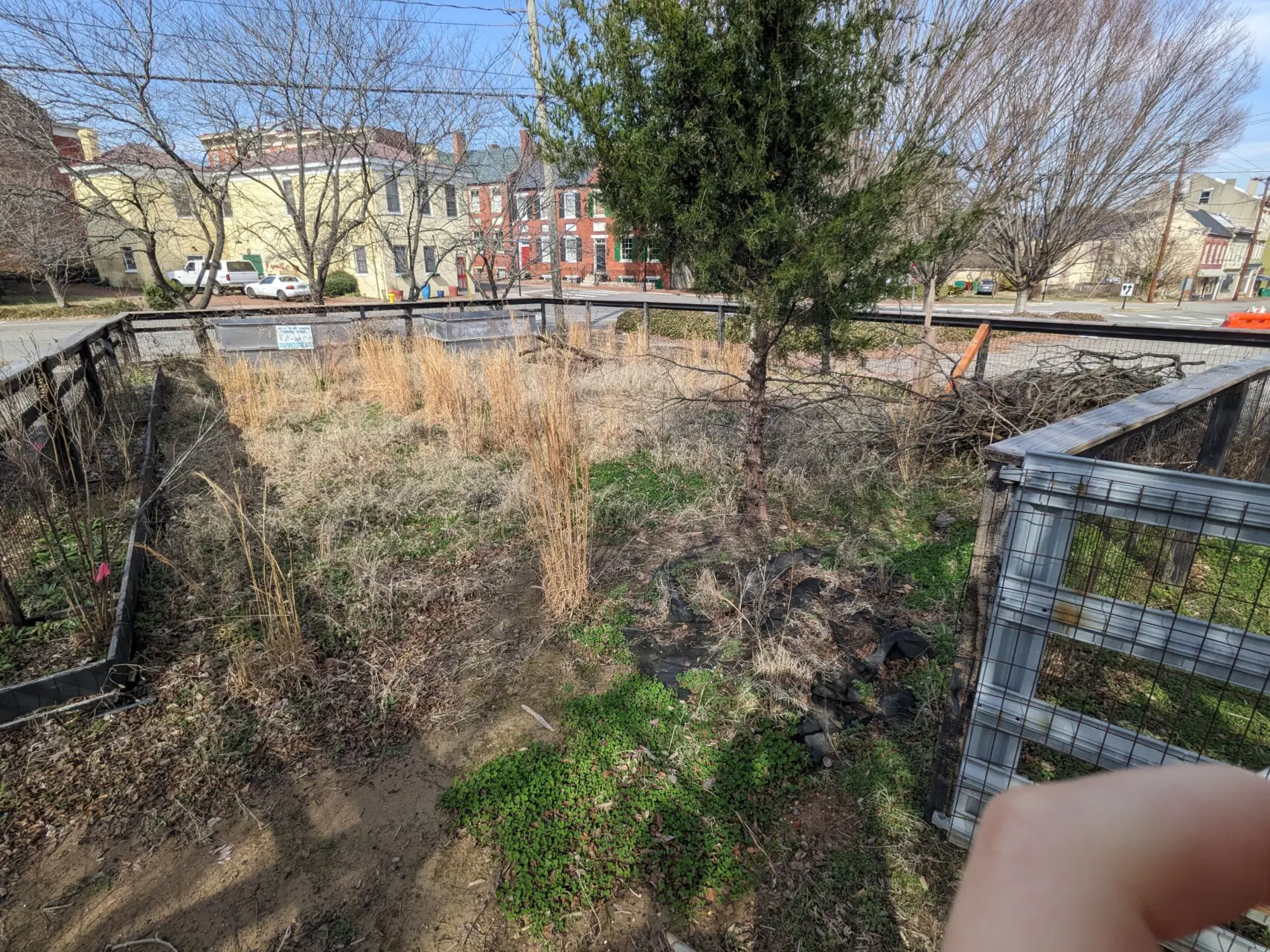
The neglected area slated for a native plant garden, March 2026 – there were a few native plants in there already! We rescued some before clearing the space.
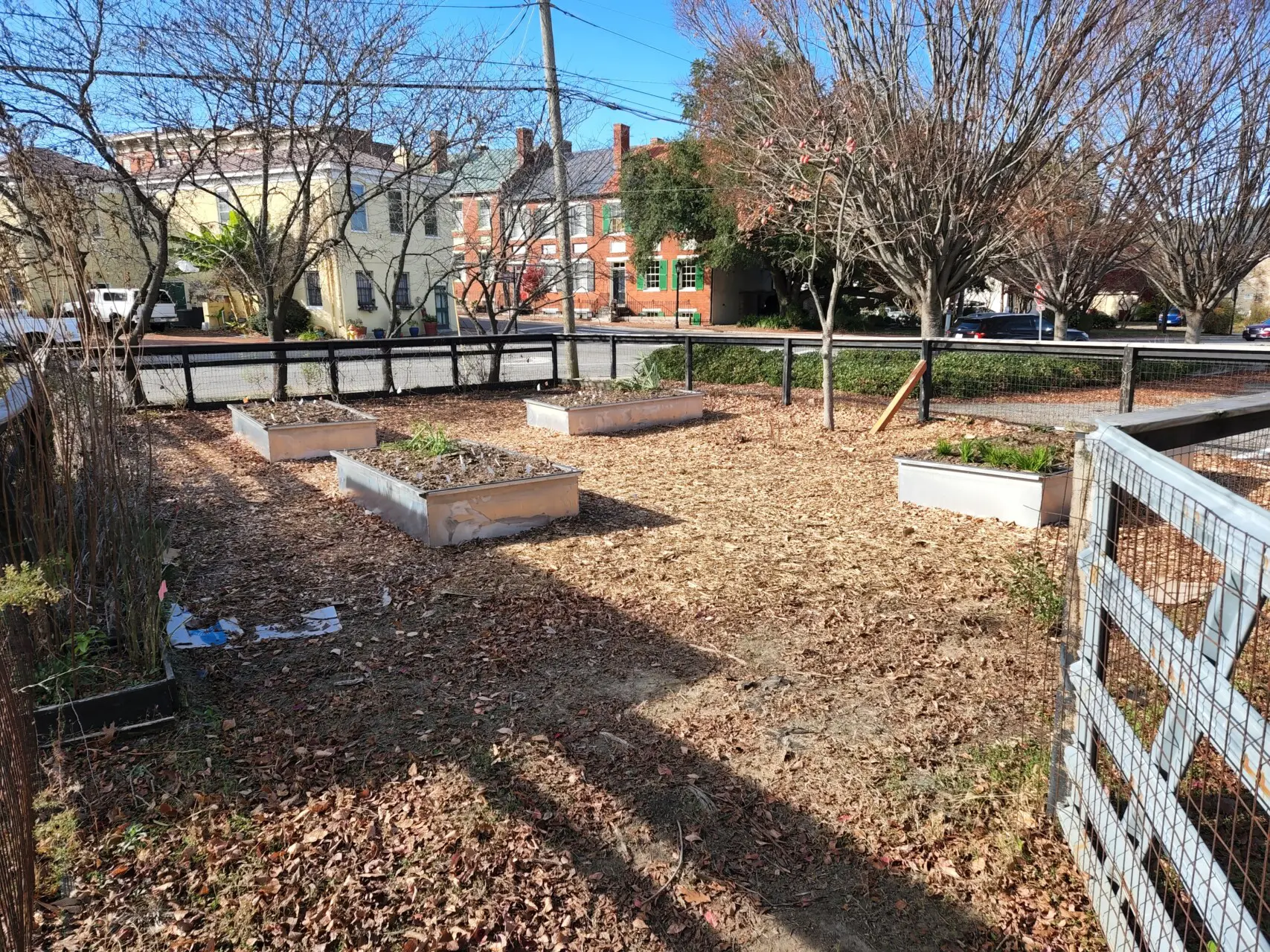
The garden after planting day November 21st, 2026. Native shrubs and trees planted during the event will fill out the space in the years to come.
This project could not have happened without the generosity of many! We used the Hügelkultur method to fill the large beds; scrappy wood pieces topped with rich soil – decomposed sawdust! – all of which was donated by Dick Cauthorn and his woodlot team at Pocahontas State Park. Along with plants purchased from native plant supplier Ashley Moulton, we had donations from friends, including Virginia Master Naturalists Donna Reese, Daryl Downing, and Jennifer Ambs; Prince George Rotary’s Chris Wiegard; and Pawpaw starter Lora Toothman, along with plants I dug up out of my own yard. Volunteers came out on multiple occasions to weed, mulch, and shovel material to prepare the space, and on Saturday November 21st we had an awesome crew to do a final weeding, tuck the native plants into their new home, and give them a good soak.
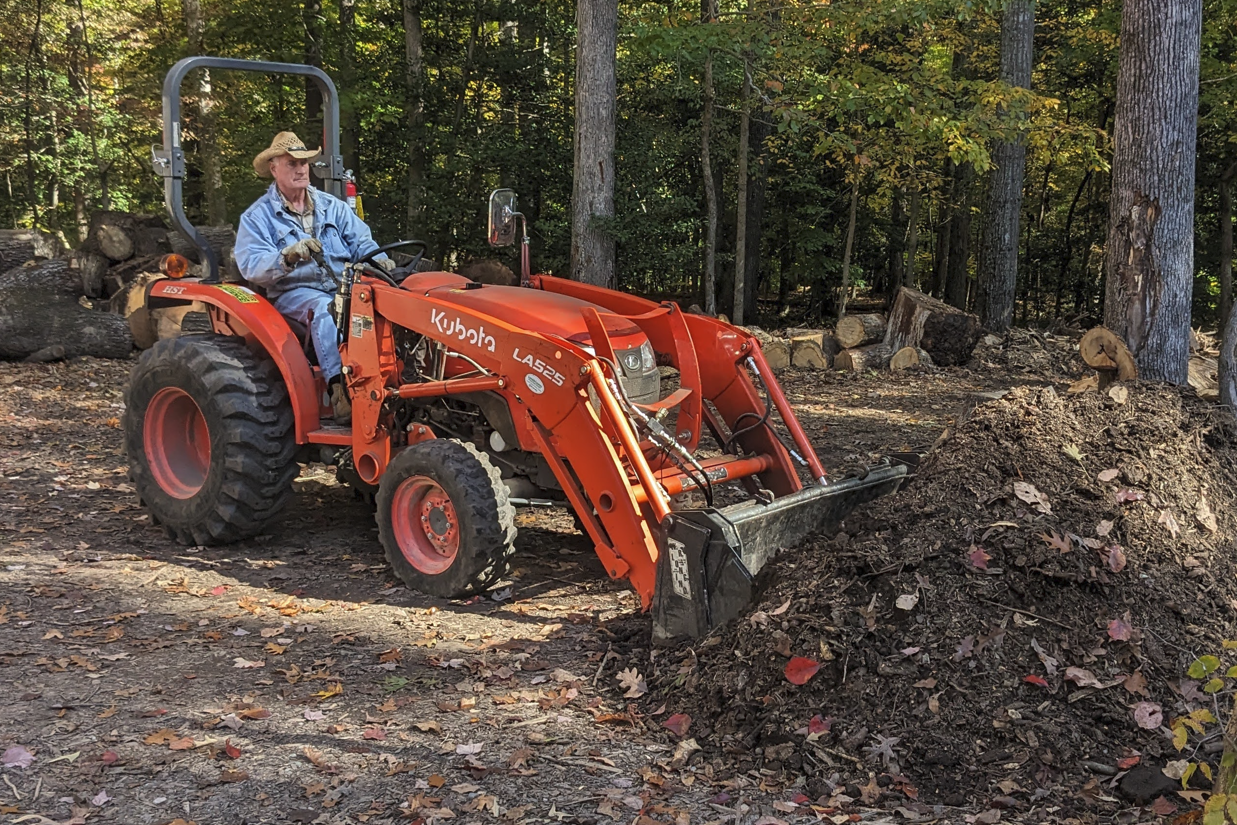
Dick Cauthorn of Pocahontas State Park woodlot looking inevitably cool while scooping soil and broken-down wood for use in the raised beds.
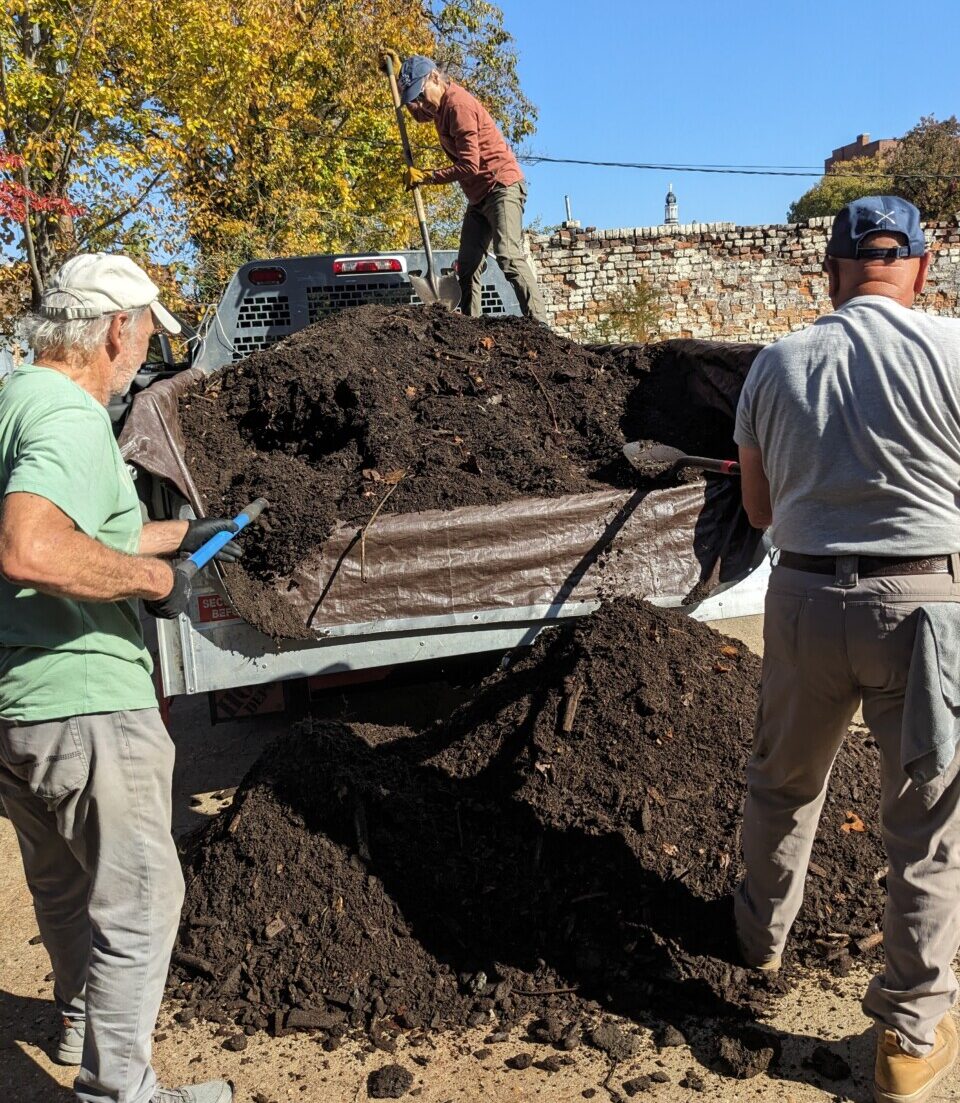
Former FOLAR Executive Director Wendy Austin hopping on the job, along with Walt Purcell and Barry Crelan.
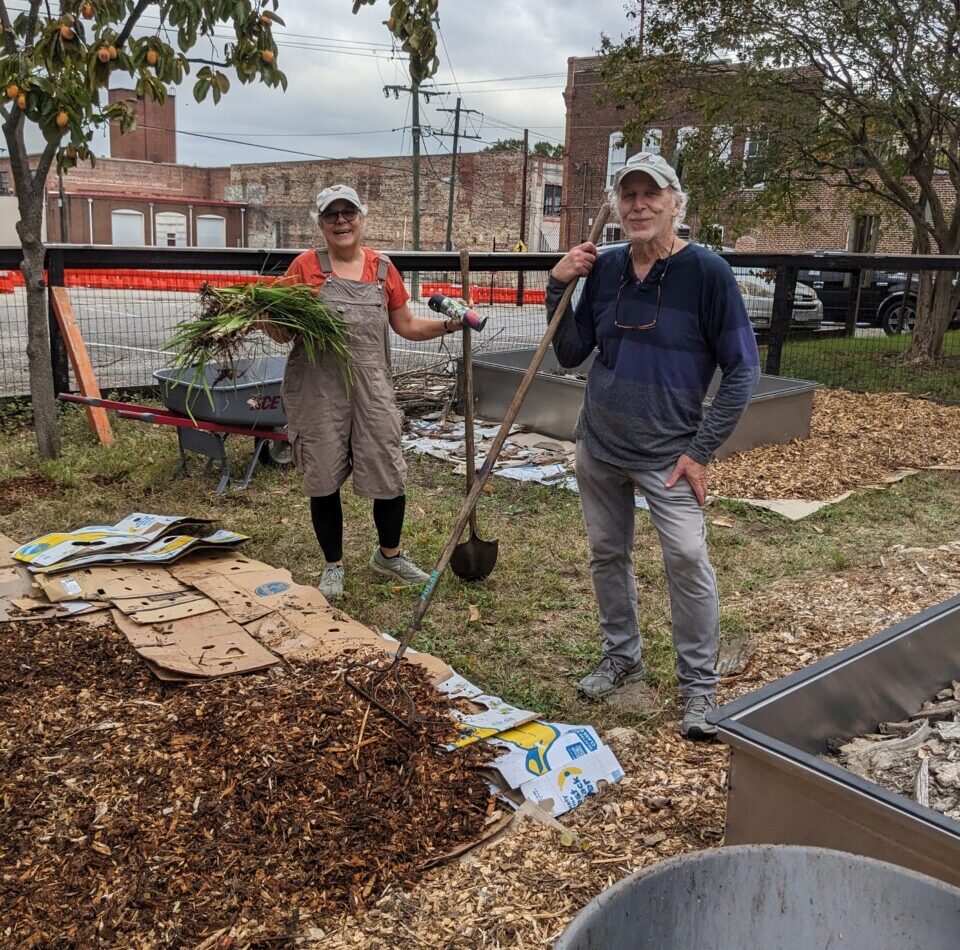
Barry and Wanda, as well as other volunteers, came out on more than one weekday to help us prepare the garden for planting day.
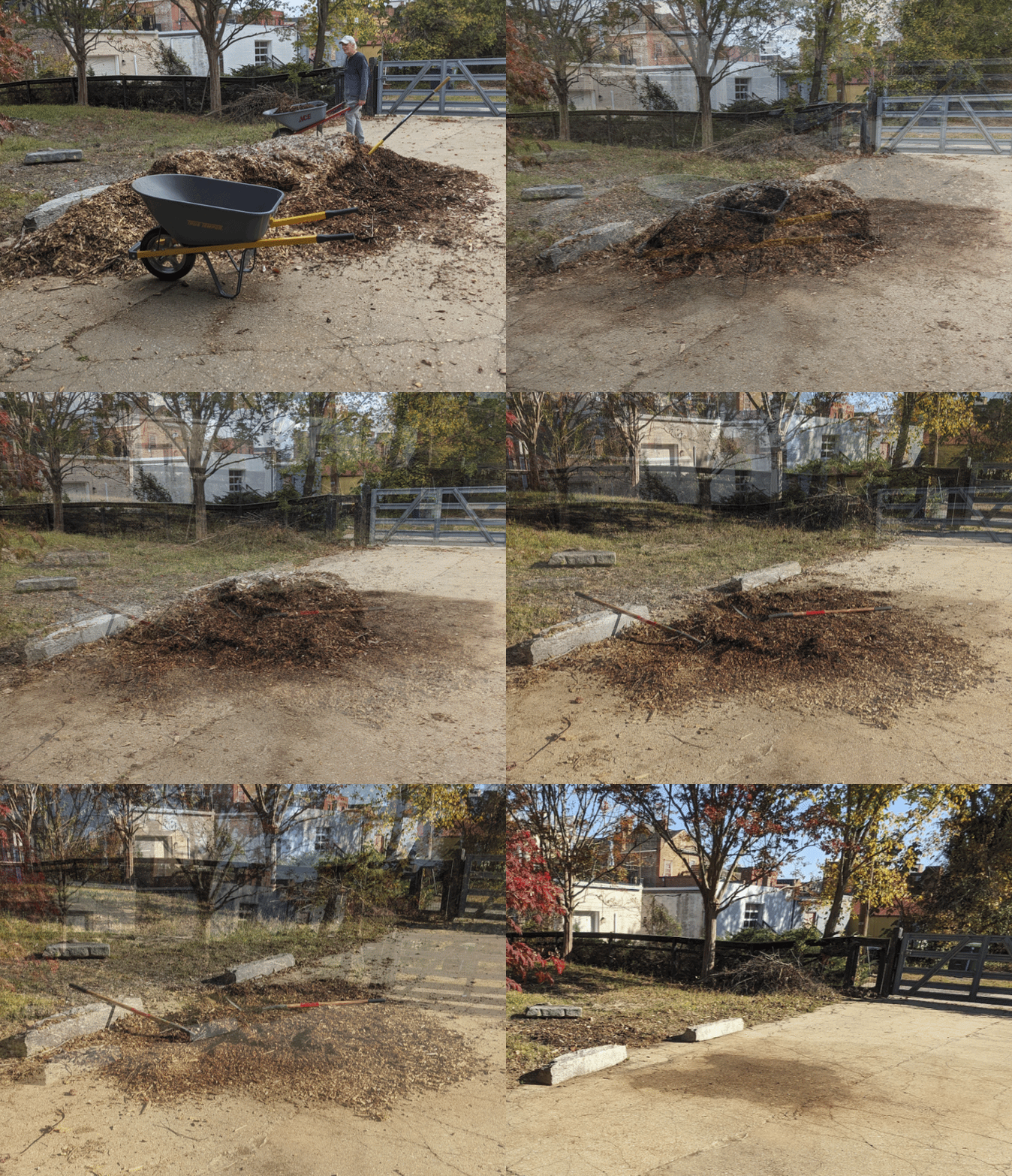
The mulch pile making its way into the new space.
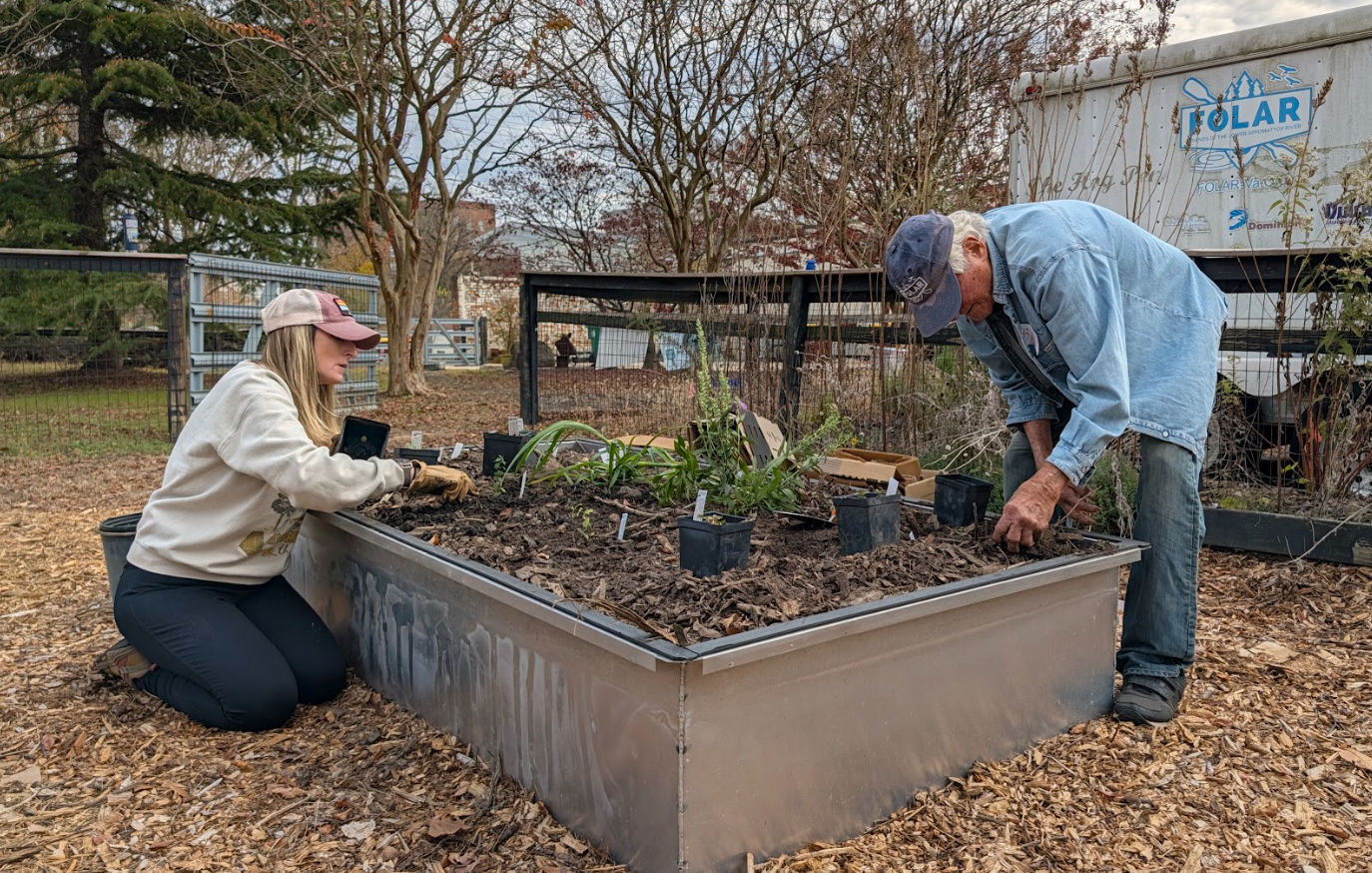
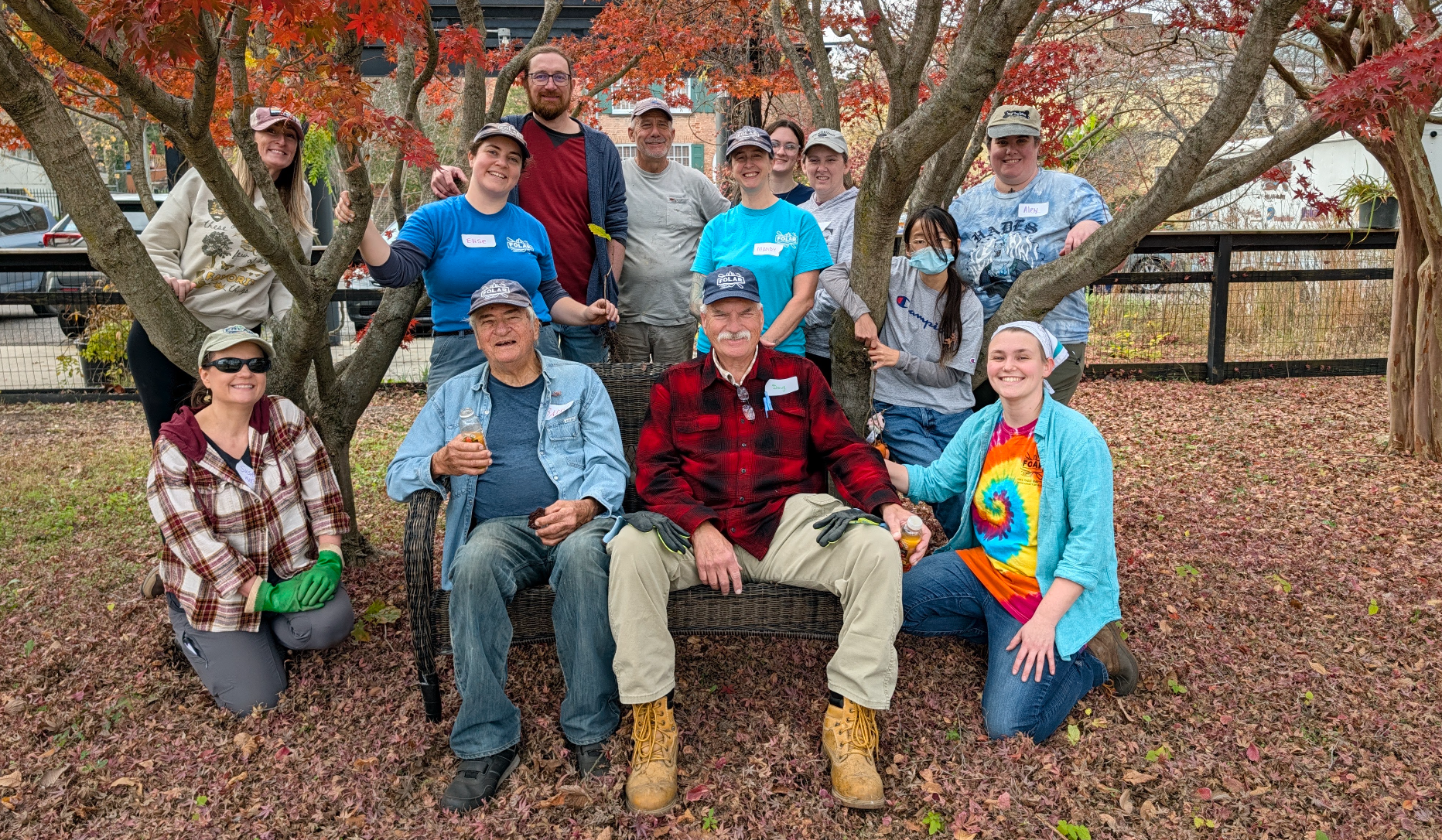
And finally, planting day! We had a great crew, including two of our previous Volunteer of the Year awardees, and Susan Watson, our board chair.
Thank you all so much! Easy to say what I am grateful for this Thanksgiving!
I was asked on Saturday, what am I most looking forward to in this space. I’m excited to see the plants growing, blooming, and showing off, but there is so much that will come along with the success of the plants; the space will become habitat for our local insects, and it will be a propagation space from which we can bring plants to our other native plant gardens.
Most of all, I am looking forward to having a space right at our office where people can see the beauty and interest of our local flora along with the life it supports, and realize the impact that they could have in their own spaces.
This is a space to help people “catch the bug” of native plants by seeing and appreciating the plants and critters just outside their doors.
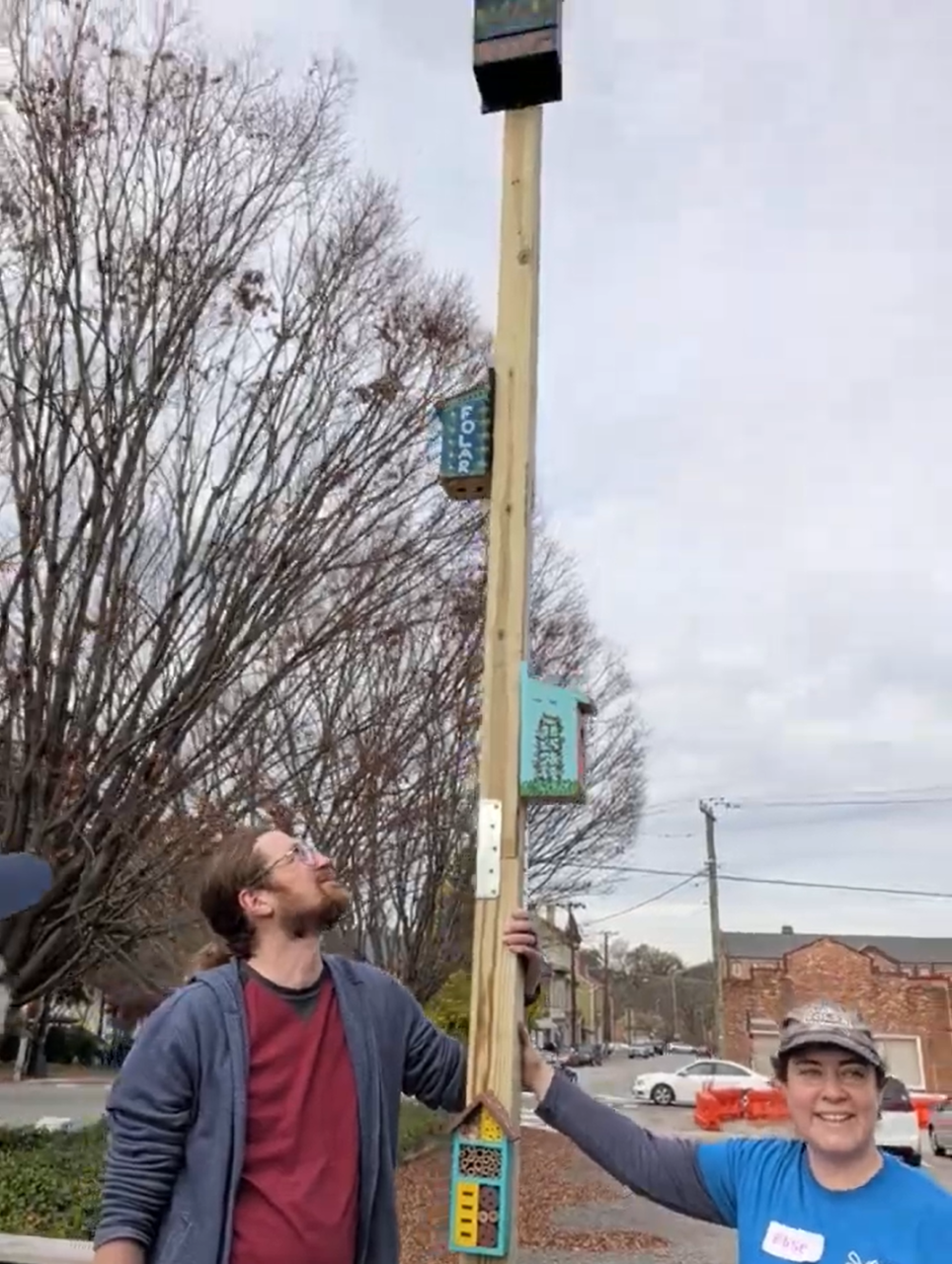
To answer the question that may still be floating; What is a habitat pole?
The idea is to create a space that provides nesting and shelter for various animals. The box furthest toward the bottom is a bug hotel, the two straddling the sides are bird houses, and at the very top is a bat box. Bats in particular are why we built the structure so tall; bats need to be able to drop from a perch in order to pick up the speed needed to fly. The recommended height is 12 feet or more, south-facing to catch the winter sunshine. We fastened two eight-foot 4-by-4s together to create a structure that would stand 14 feet tall when 2 feet embedded in the ground. If it turns out that bats like it, we will be providing shelter for an animal that is increasingly threatened in the wild.
Like Doug said when we were putting up the post, “If I were a bird, I’d be moving in right now!” I might not fit in the birdhouse, but I bet passing folks will be seeing me perched in this space for years to come.
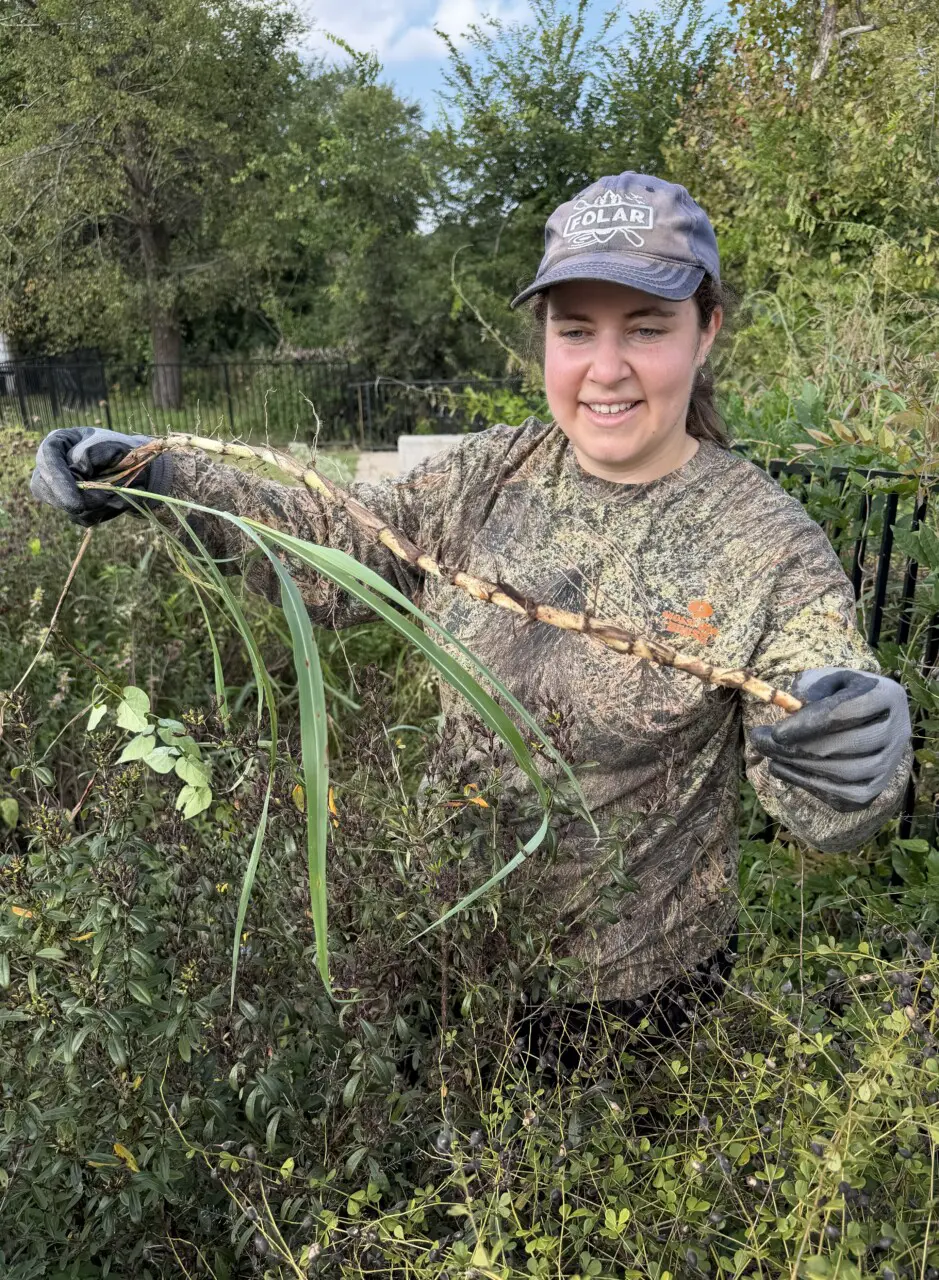 Elise Neuscheler is FOLAR’s Environmental Stewardship Manager, a Virginia Master Naturalist, and chaplain of her local Garden Club. She speaks to groups on Native Plant Gardening, Invasive Plant Management, and Composting and Soil Health among other topics, and hosts invasive plant removal, native plant gardening, and trash pickup volunteer events on the Appomattox River Trail with FOLAR.
Photos provided by Elise Neuscheler/FOLAR unless otherwise captioned.
eneuscheler@folar-va.org