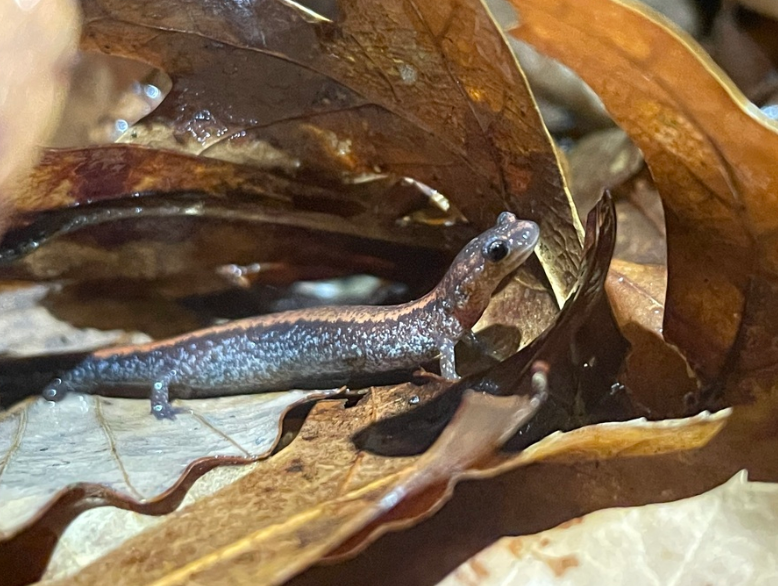
Eastern Red-backed Salamander (Plethodon cinereus) enjoying its favorite habitat. These are one of a handful of delicate “lungless salamander” species who depend on toxin-free damp spaces like deep leaf litter to breath through their skin.
Photo provided CC0 by iNaturalist user @orionid
By Elise Neuscheler, Environmental Stewardship Manager
If your inbox looks anything like mine, you’re getting seasonal notifications to “Leave the Leaves!” as they fall from your trees. This has a huge ecological benefit- fallen leaves are habitats for fireflies, small herbivores like caterpillars, and even charismatic fauna like salamanders and other ecologically invaluable cuties and crawlies- read on to meet a few! If you decide to pick up the rake, I have a couple of suggestions to maximize fallen leaf benefits within your space.

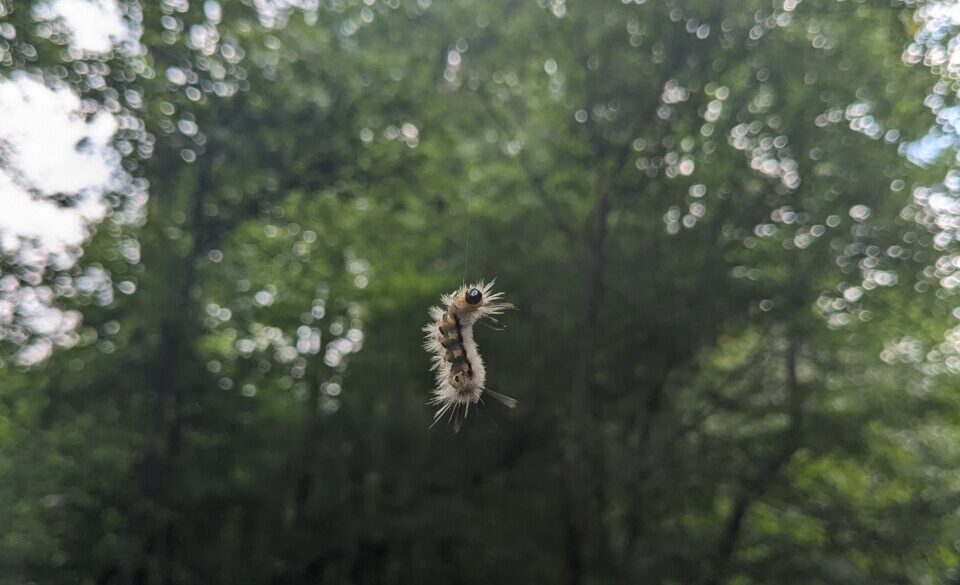 This caterpillar making its way down from the canopy via an almost-invisible line of silk will be very pleased to land in soft leaf litter if its line breaks. It will use the leaves for shelter until it reaches adult form.
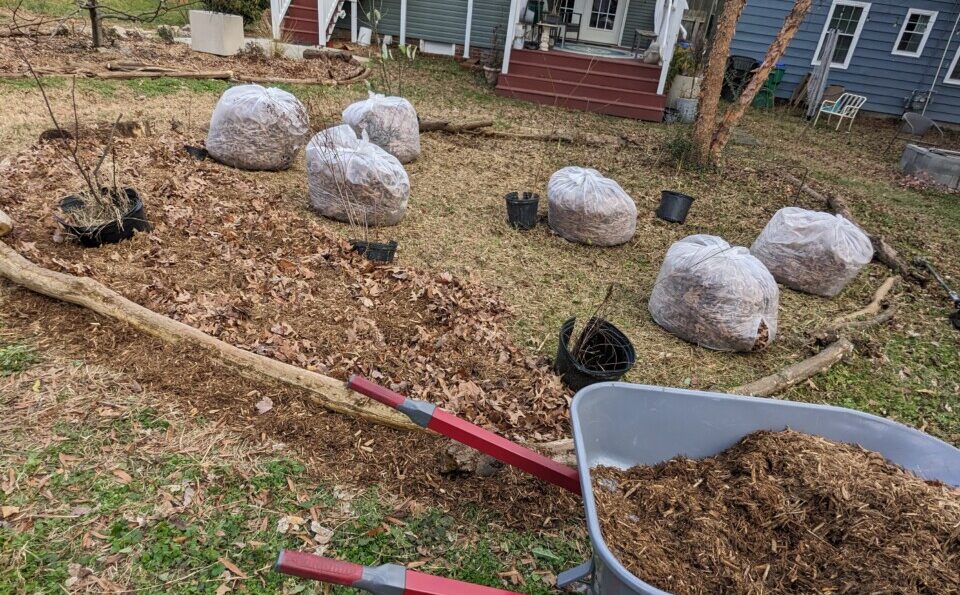 My neighbor’s leaf bags set up in my yard for laying in a new garden bed area. A light sprinkling of mulch on top helps reduce wind disturbance of your leaf layer.
It’s a party in the leaf pile! Here are a couple more esteemed guests:
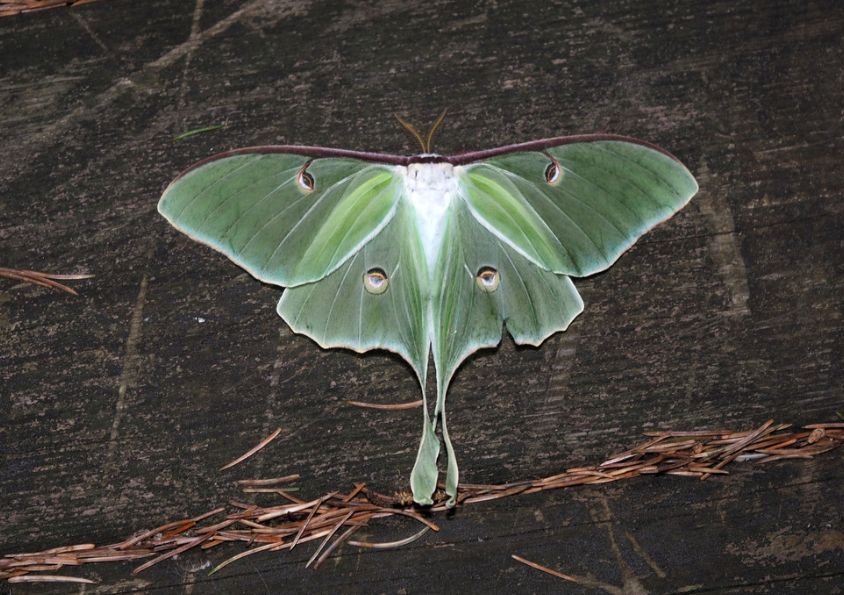
The strikingly beautiful Luna Moth (Actias luna) spins protective cocoons inside fallen leaves to protect itself through the winter, before emerging as an adult the following year. Photo provided CC0 by Trix Niernberger.
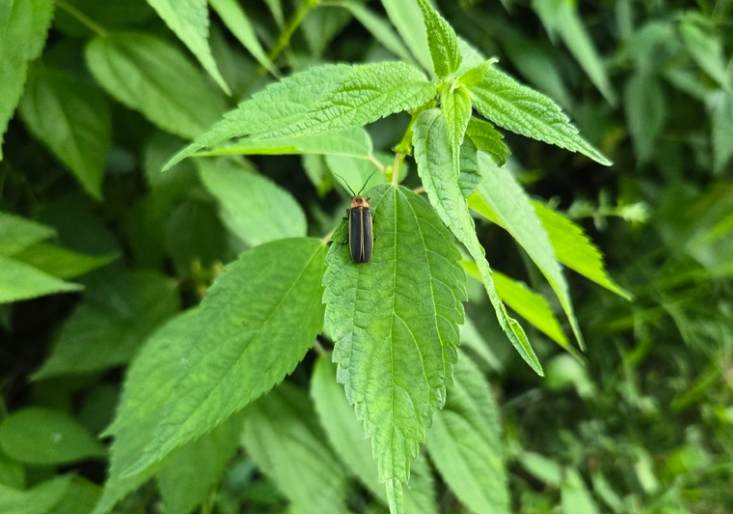
Common Eastern Firefly (Photinus pyralis) spends the majority of its life as a larvae that eats snails, slugs, and other soft prey in moist leaf litter, before emerging as the adult that lights up our summer evenings. Photo provided CC0 by Adam DeHollander.
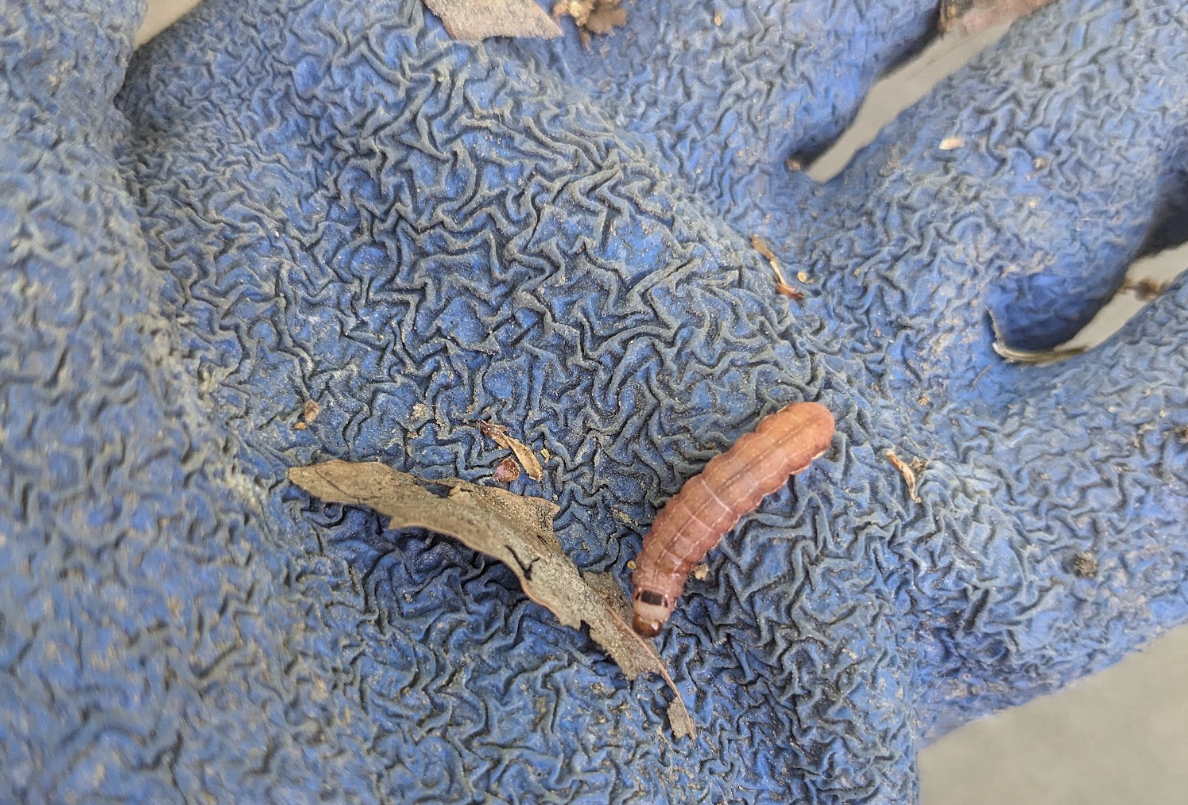
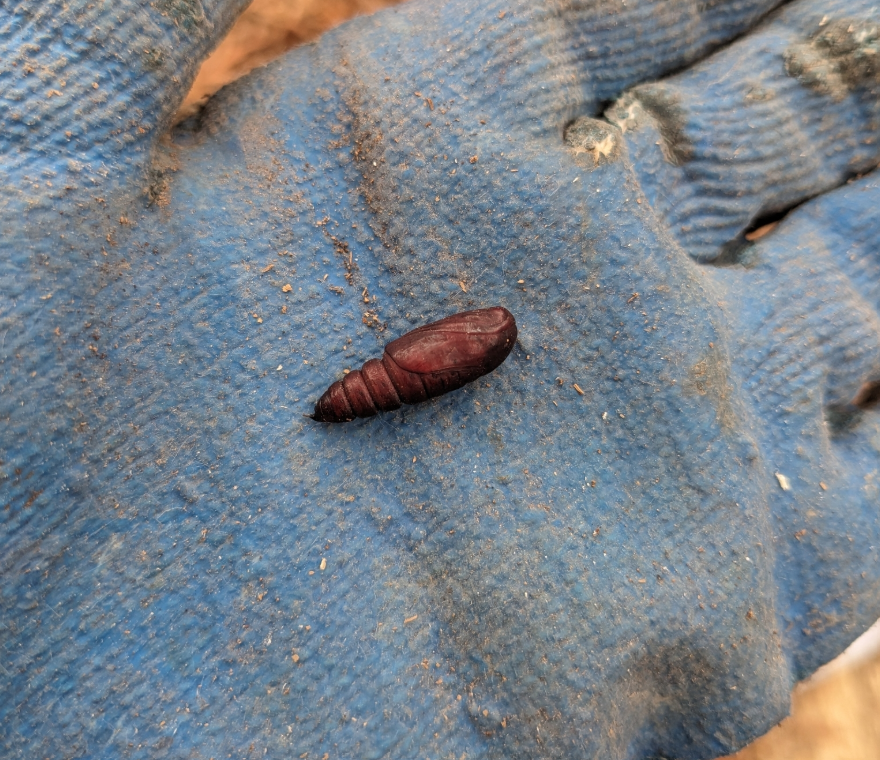
Moth and butterfly species are so numerous, varied, and sometimes similar-looking that all I would know is to label these two backyard finds as “lepidoptera.” Your local winter birds or springtime songbirds, however, would happily label them “Lunch.”
I have heard of folks piling up leaves and then running the lawnmower over them for a closer-to-soil product. This practice will unfortunately eviscerate any life that may already be making use of the leaves. “Detritivores” (new word for me, since watching The Extraordinary Caterpillar documentary!) are a type of herbivore that make use of fallen leaves as a food resource, ultimately making a much better soil than mowing the leaves would. There are many detritivore caterpillar species. Keep them alive – use of a rake and/or leafblower is likely all you need to wrangle your fallen leaves.
With a creative eye, you’ll find uses for fallen leaves all over the garden, and maybe even start asking your neighbors if you can have their bagged up leaves too! If nothing else, fallen leaves make an amazing addition to a compost heap, adding bulk nutrients to provide healthy soil for your garden down the line. A pile of leaves will eventually become “leaf mold,” a powerhouse soil amendment for your garden needs.
— And in the years to come, you’ll be counting more and more twinkling fireflies every summer. To the small ones, your tree’s leaves are a lifeline- they are giving these magical animals a chance to thrive. Thank you for reading – Enjoy the season!
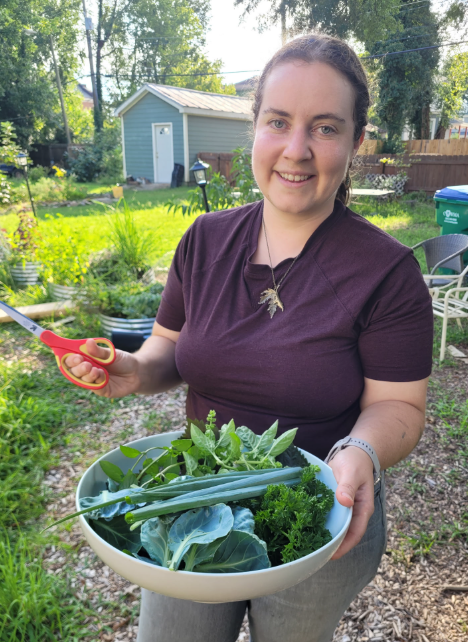 Elise Neuscheler is FOLAR’s Environmental Stewardship Manager, a Virginia Master Naturalist, and chaplain of her local Garden Club. She speaks to groups on Native Plant Gardening, Invasive Plant Management, and Composting and Soil Health among other topics, and hosts invasive plant removal and trash pickup volunteer events on the Appomattox River Trail with FOLAR.
Photos provided by Elise Neuscheler unless otherwise captioned.
eneuscheler@folar-va.org