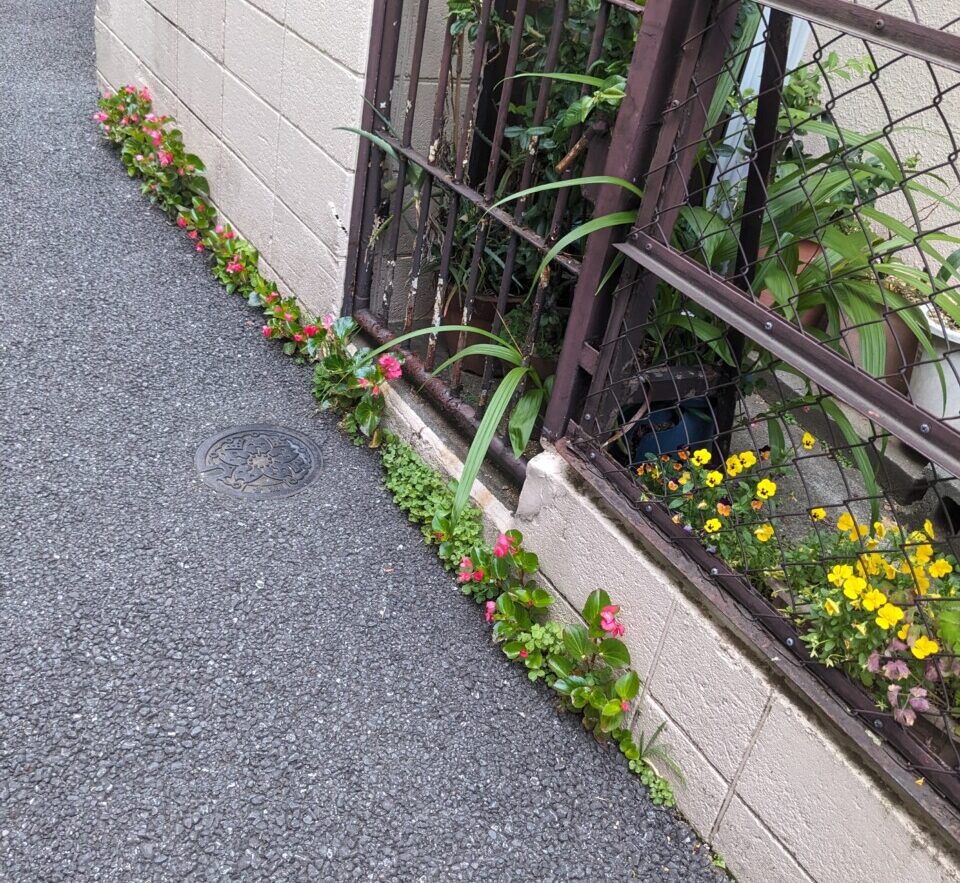
Begonia cucullata from South America expanding the footprint of a tiny Japanese garden space.
By Elise Neuscheler, Environmental Stewardship Manager
Crack gardening? Sidewalk bonsai? There isn’t really a term for the gardening practice of removing unwanted plants and intentionally keeping other plants in sidewalk cracks, so let’s lean on the descriptive Sidewalk Crack Gardening. Inspired by the plants spotted growing between stone and cement in Japanese side streets in 2025, I have been dabbling in my own spaces to find native Virginian plants that could survive the brutal trials of growing in the crack of a sidewalk. Some may reasonably find an article about native sidewalk crack gardening absurd, but what is gardening without a little fun? The preferred standard for most folks would be a lack of cracks in their sidewalks, but alas, in any old Virginia town you’d best watch your step. Once a crack is there, something is bound to grow – so why not make it something beautiful and habitat-supportive (instead of tearing your hair out along with the weeds)?
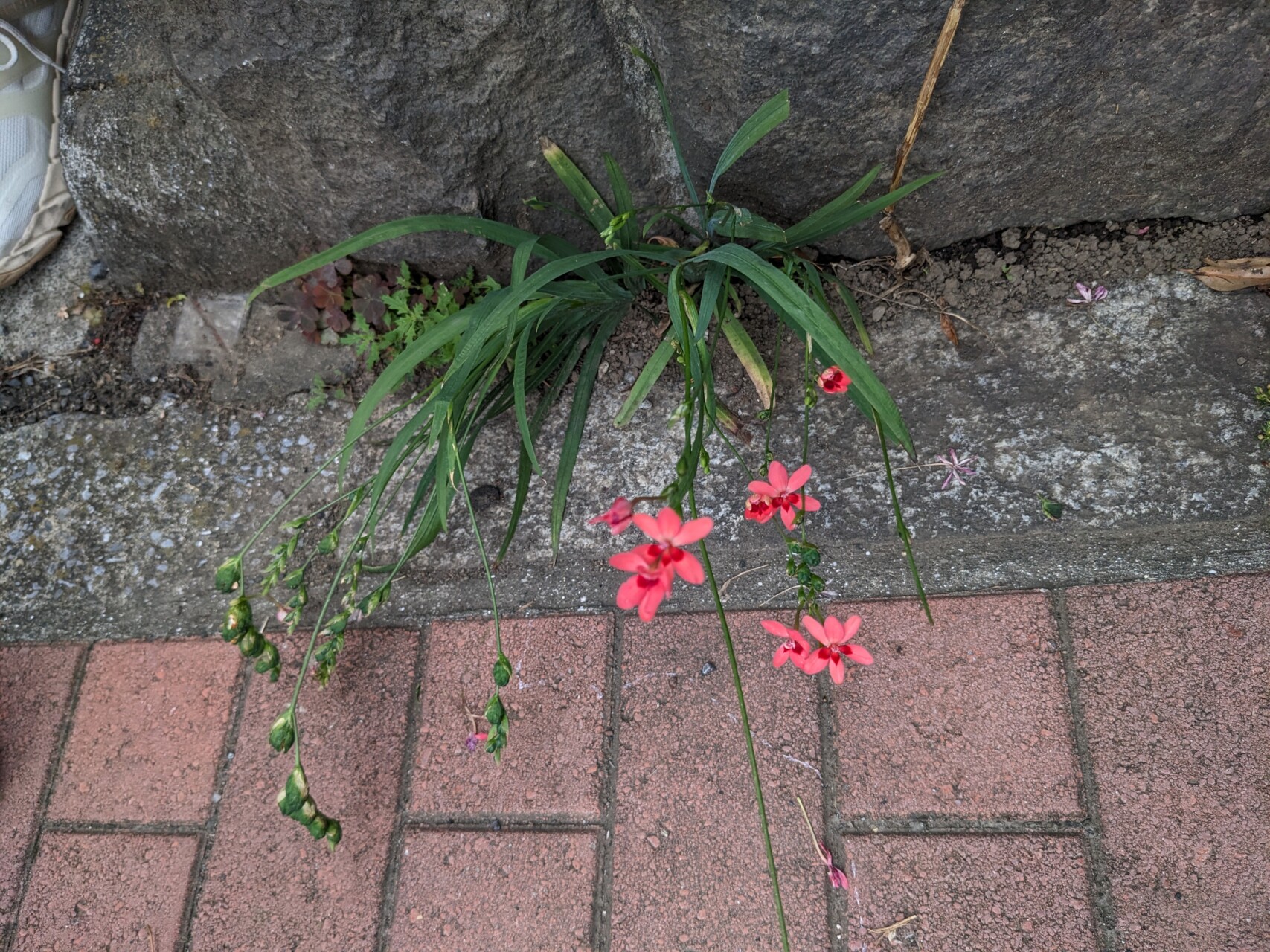
A South African native (Crocosmia crocosmiiflora) making its way in a Japanese alley.
I am just starting on my native Virginia sidewalk crack gardening journey; have some knowledge to share? I’d love to hear it! Photos taken by me unless otherwise labeled. All of the plants described below were already present in my space; there were no purchases made. If you keep an eye out, you may find many of these plants already growing near you.
Why “bonsai?” I have noticed that in dire situations, plants will “scale” their growth, remaining tiny in small spaces, keeping tightly together when their extremities get damaged. This way you find older-growth plants that are still small, much like the practice of keeping bonsai trees. Bonsai is a style of tree pruning inspired by the ancient trees on windy, rocky mountainsides; the harsh conditions the plant is growing in force it to remain small and take on interesting forms to survive. Let’s dive into some native VA plants that could survive a tough sidewalk life.
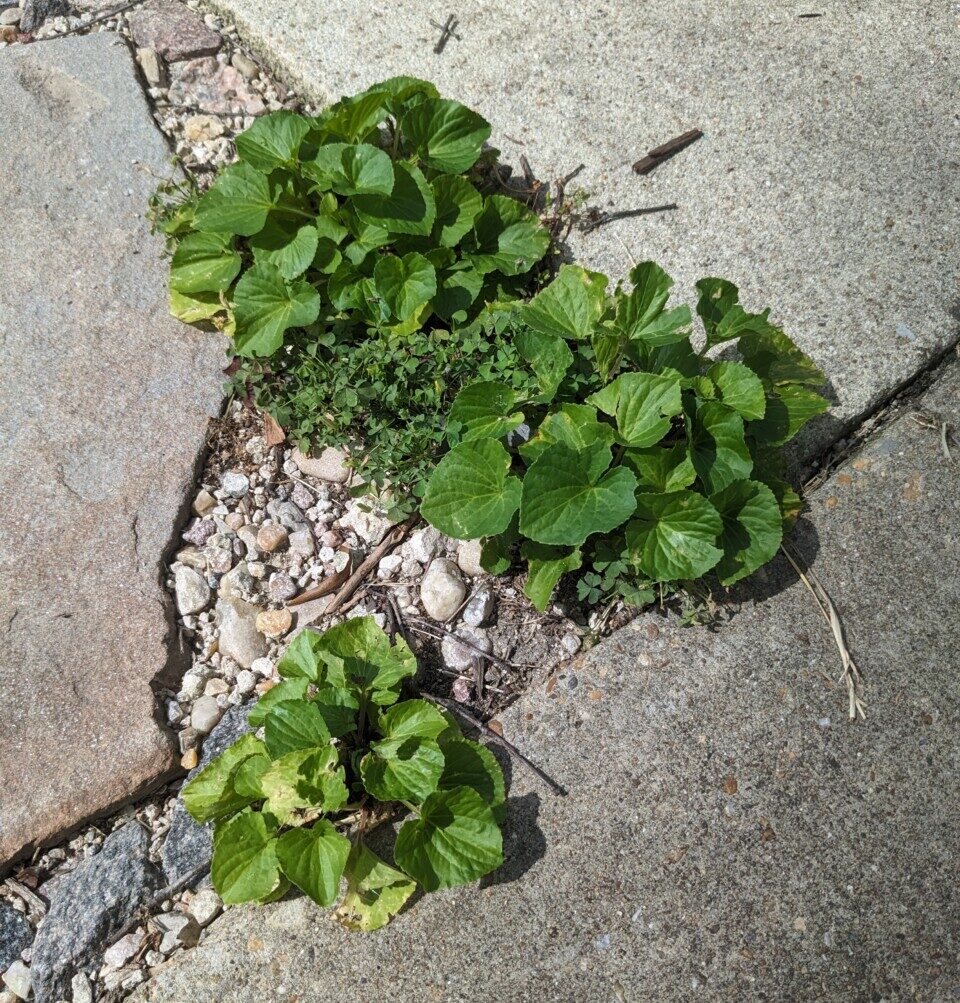
Common Violets. The ones that love living in your lawn – Viola sororia. These plants that no one would ever have to buy are, in my opinion, vastly underutilized groundcover in gardens, behaving similarly to hostas when given a chance to thrive. Why are they good for sidewalk gardening? They form a bulb-like rhizome underground, which is capable of storing water and energy, keeping the plant perky even in dry seasons. This root system also allows for the leaves to die back to the ground for winter, popping back with a head start in early spring with their pollinator-popular purple blooms. I wasn’t sure if these three would survive when I put them along this stony sidewalk edge in late spring, but they are managing well through heat and drought.
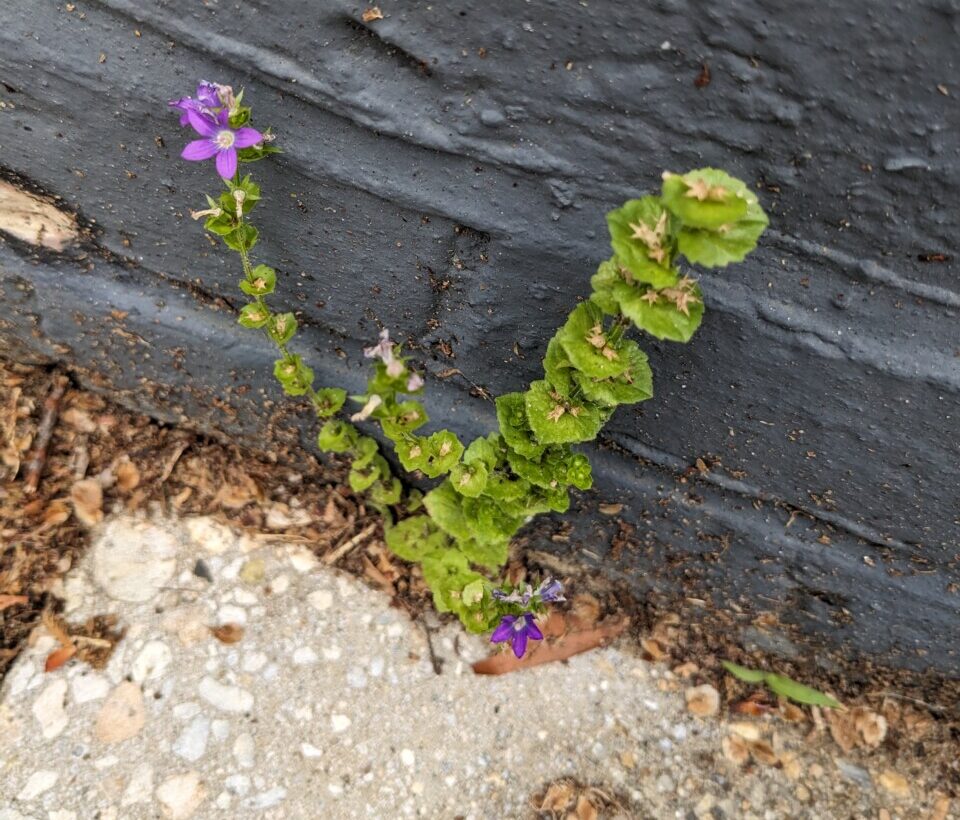
Sometimes you see little blooms making their way in difficult spots, and you expect it to be some kind of non-native or perhaps even invasive plant. But there are plenty of surprises in the plant world! This vibrant purple bloom was growing out of the crack between brick and pavement. A tougher time couldn’t be had, but this Virginia native “Venus’ Looking Glass” (Triodanis perfoliata) appears to think otherwise. This plant couldn’t take foot traffic, as it’s too tall, but there may be a lonely crack along a wall just waiting for a little green and purple.
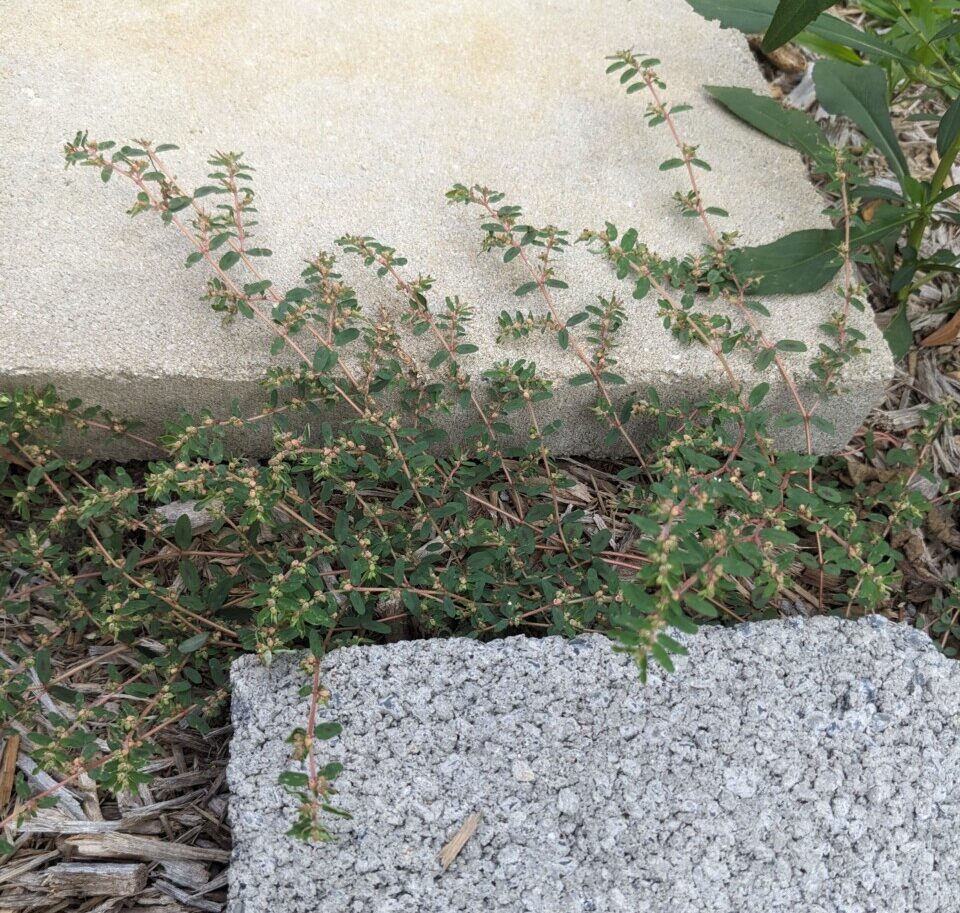
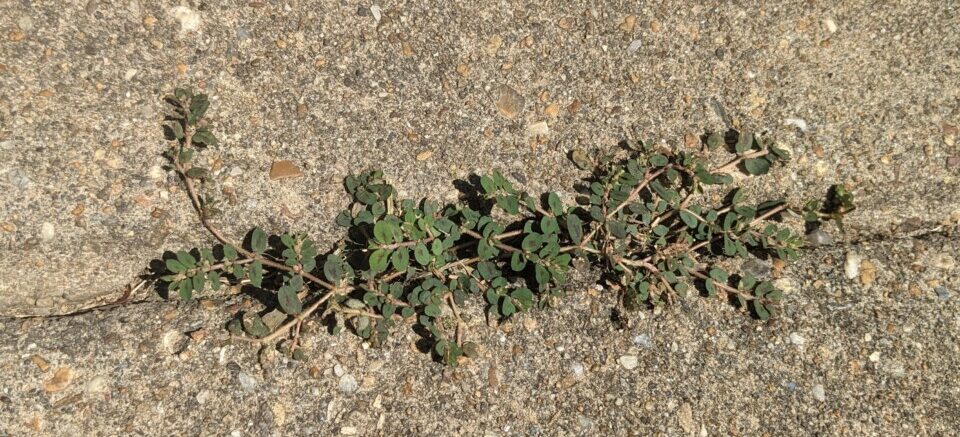
Spotted spurge (Euphorbia maculata) is a dainty Virginia native annual that could survive the most sun-scorched lawn conditions— and is known to have a knack for sidewalk crack opportunism. While this plant stays low and can be walked upon, you will see it come and go; starting from seed in late spring, and thriving for six months, before dying and starting again the next year. As a native plant, it is providing nutrients and resources for (very small) native insects with its teeny-tiny flowers.
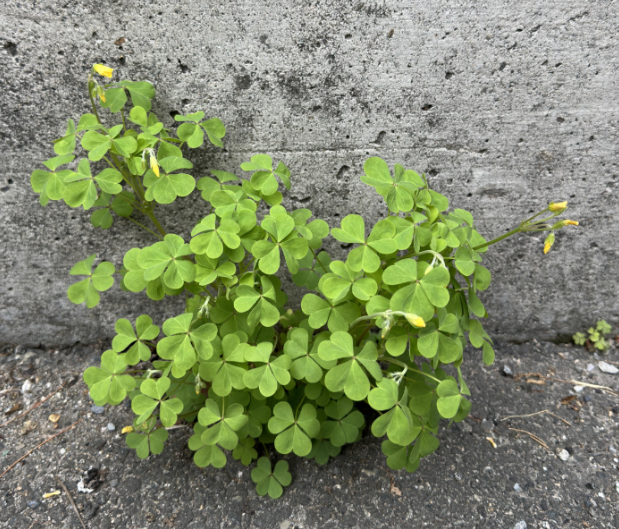
Above photo provided by user @benlovesdabs on r/forager
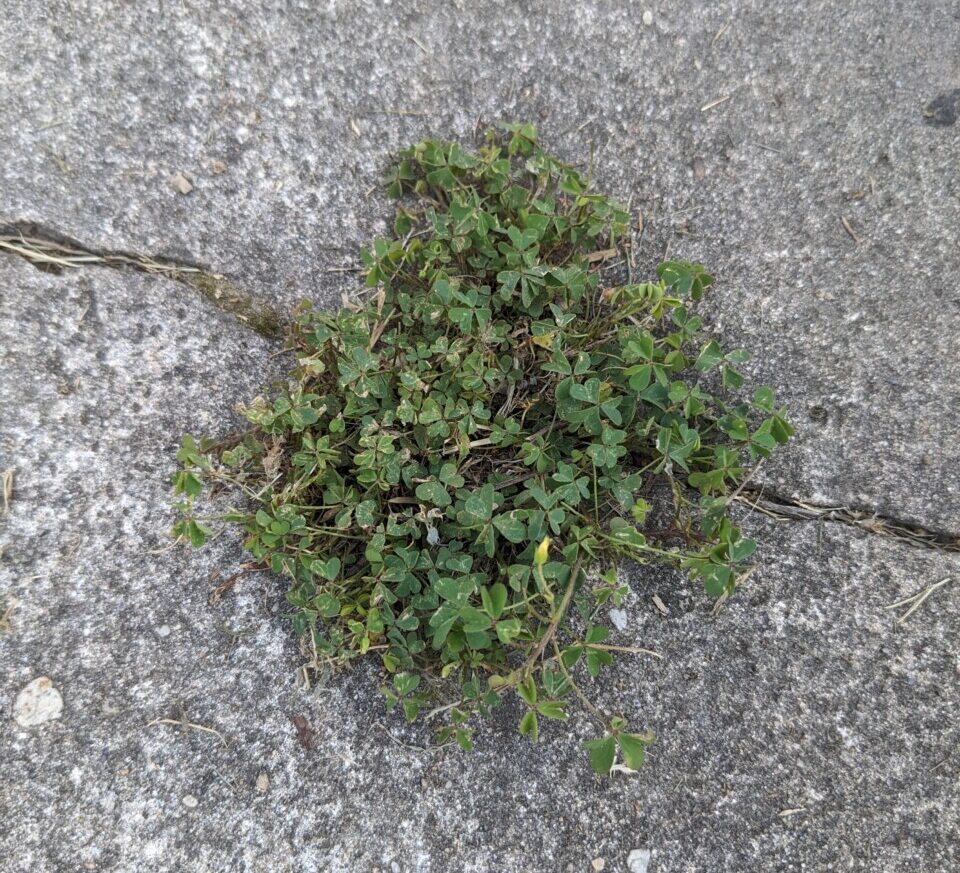
Common wood-sorrel (Oxalis stricta) sports a happy yellow bloom if you don’t mow it over. The three heart-shaped leaves and yellow blossoms of wood sorrel are easy identifiers to compare against the three round leaves and white blossoms of clover. Along the corner of the wall, in shade, it is looking luscious, but the one right in the middle of the sunny sidewalk is at least surviving well, considering how many times it’s been stepped on. It’s even putting out a little flower! Apparently, this plant is edible, but please do further research – this article is strictly Sidewalk Crack Gardening, not Sidewalk Crack Foraging (I would advise against this).
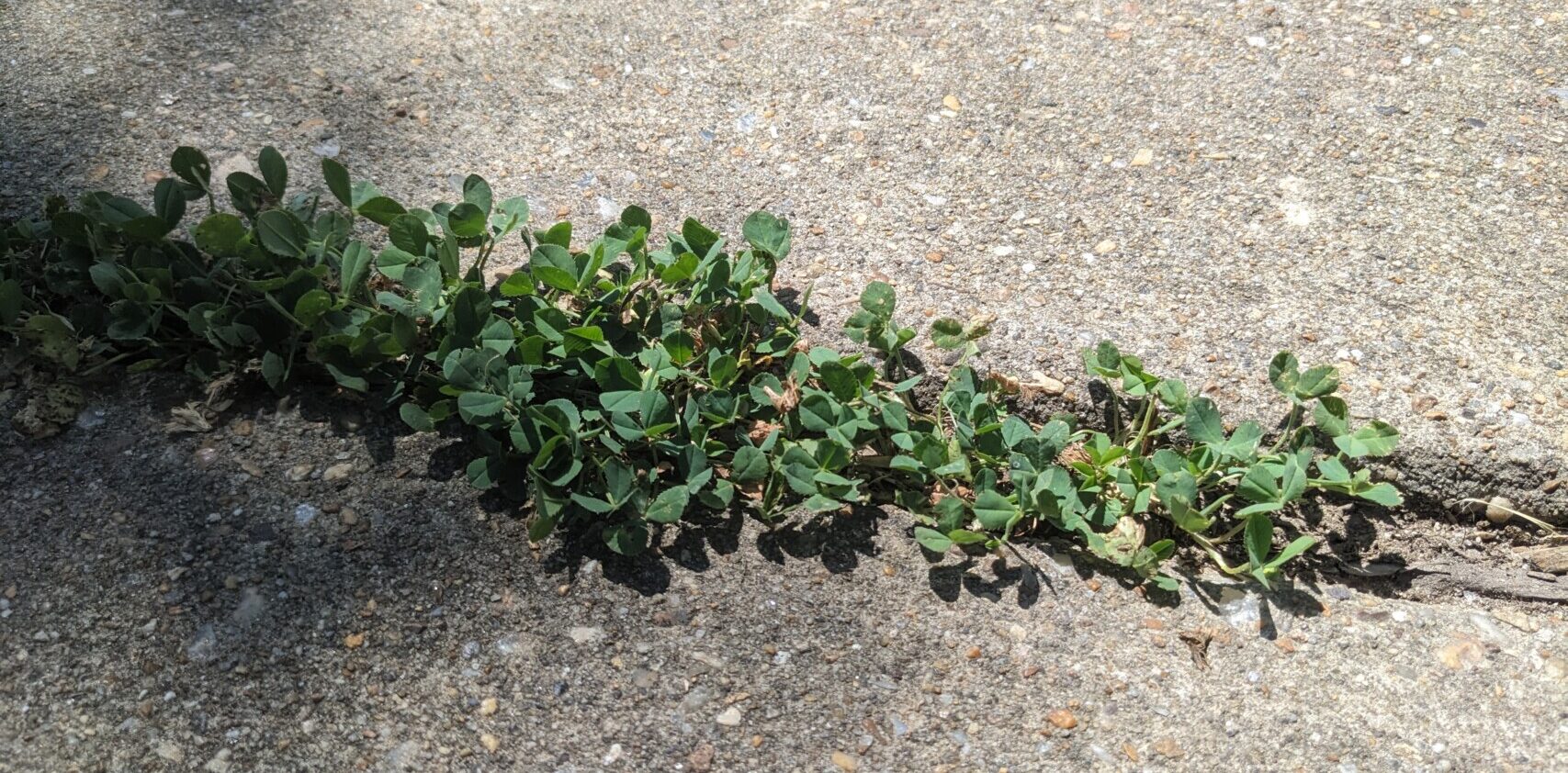
While I am here thinking about clover— that is another decent Crack plant. The common White Clover (Trifolium repens) is not native to Virginia, but it is a legume (AKA bean plant), which enriches the soil by storing nitrogen from the atmosphere. Do you want to enrich the cracks in your sidewalk for other plants to thrive? Well… if you’re a Sidewalk Crack Gardener, sure! Clover can handle a lot of foot traffic and also provides blooms, so while I will probably remove it sometime for native plants to move in, I’m not in a particular hurry.
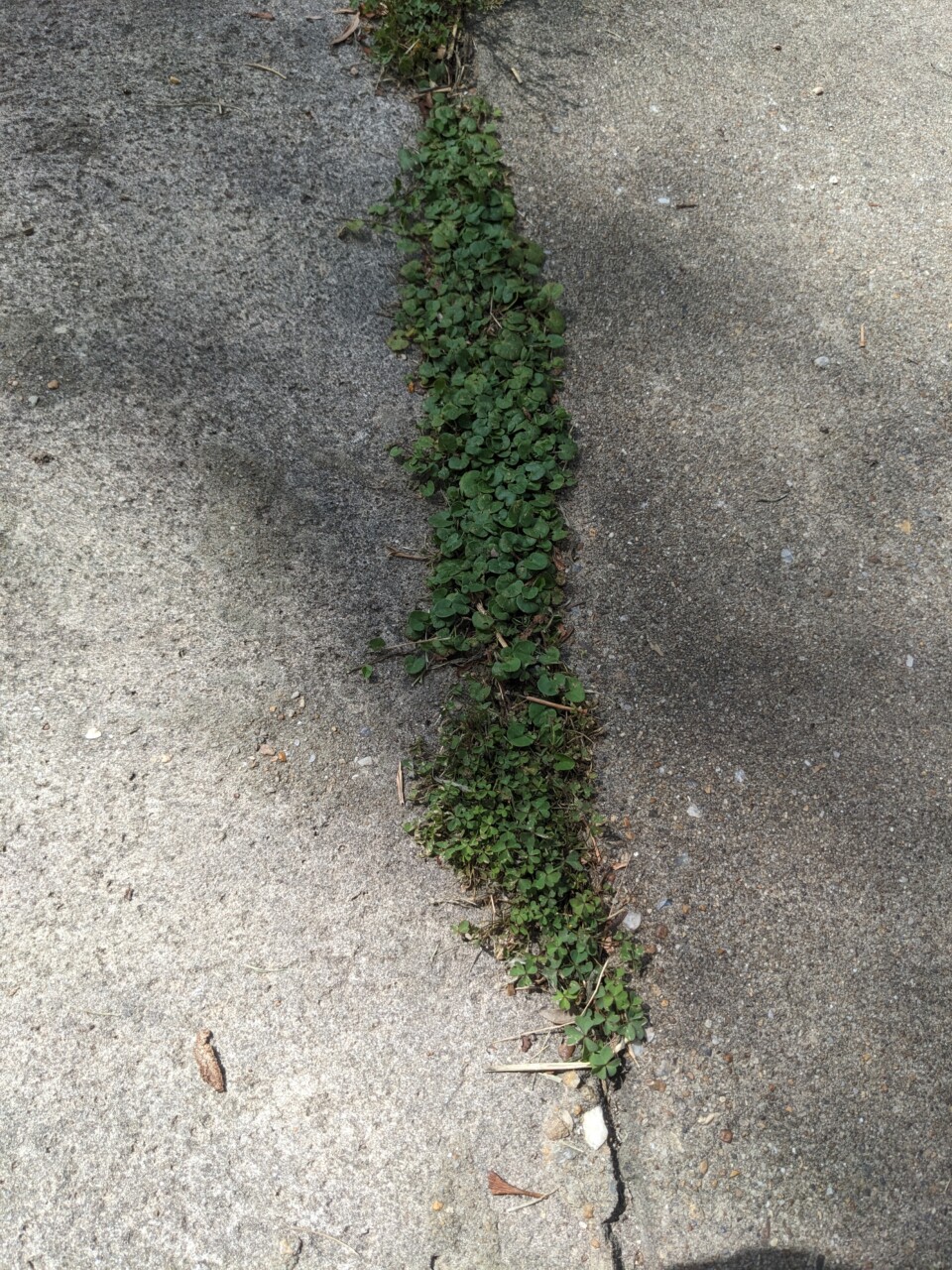
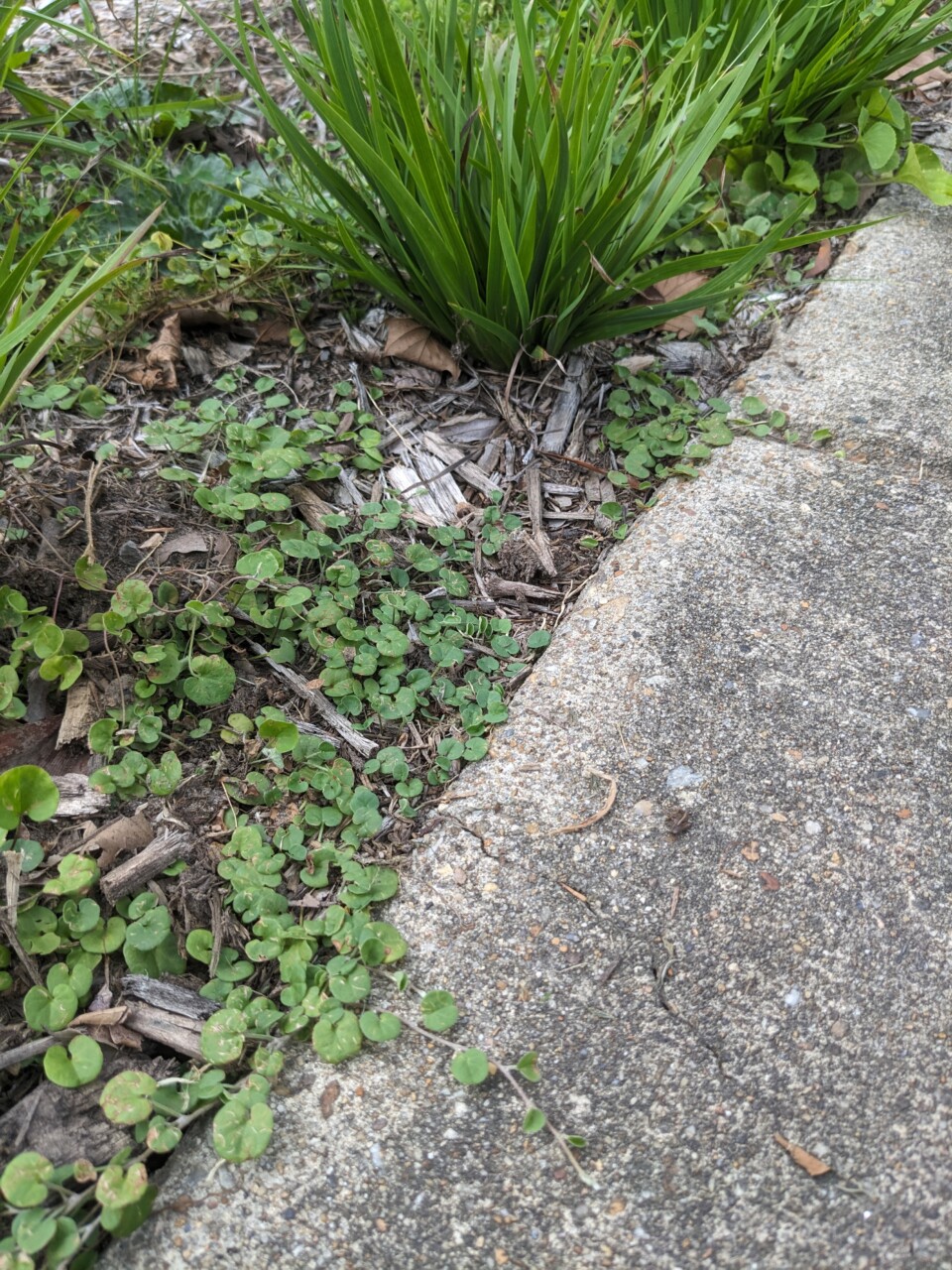
Carolina Ponyfoot (Dichondra carolinensis) is an adorable crack-filler and does well as a groundcover near sidewalk edges. Edges of garden beds are hotspots for pain-in-the-neck plants like wiregrass, which creep up the gap between mulch and concrete. Filling that “real estate” with desirable plants will keep your weeding tasks down in the long run.
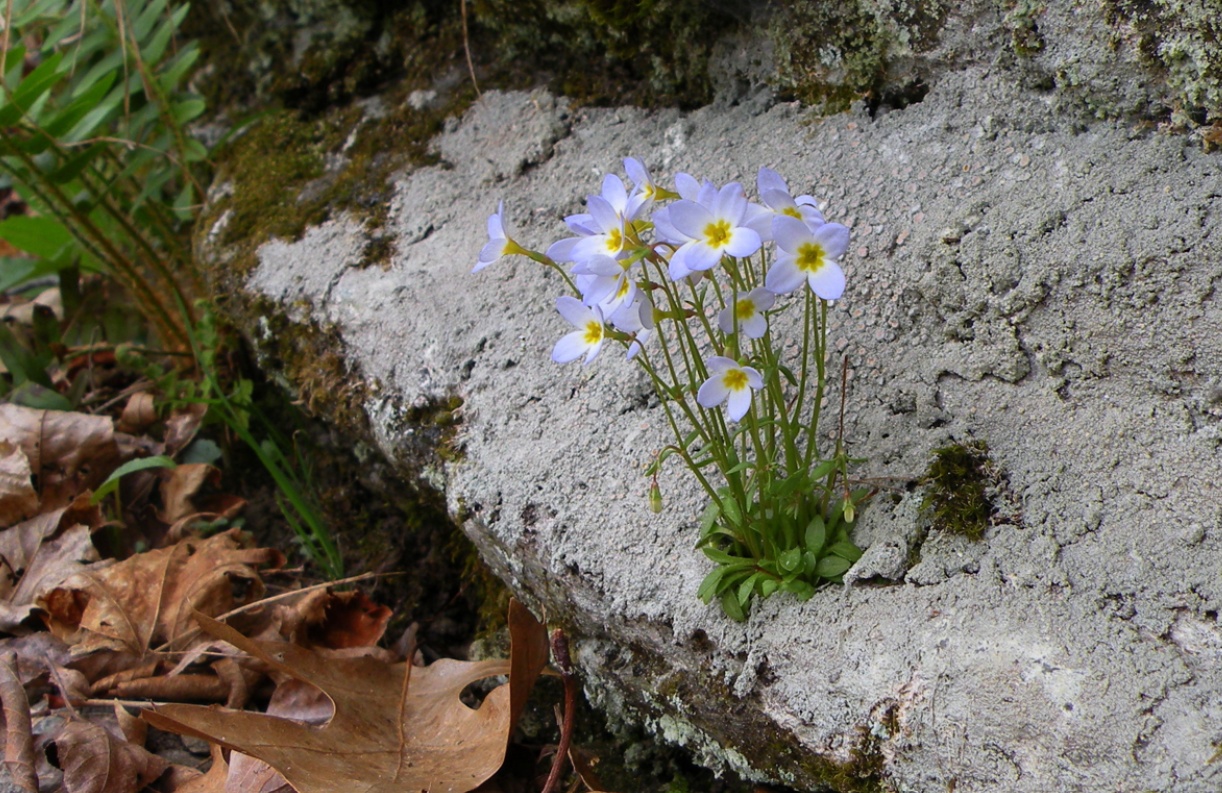
Photo provided Creative Commons by Doug McGrady on flickr.com
One I’d like to try is the Common Bluet; Houstonia caerulea. As the photo above shows, it could be a great candidate for sidewalk crack gardening. I see these cute little native blooms occasionally in sun-scorched lawns, and have been looking to tuck some into the corners of my space.
Why spend time fussing with sidewalk cracks when there’s Japanese Stiltgrass, wiregrass, and crabgrass creeping into actual garden beds? Well, hey, I’m working on that too. As I go through the process of turning my hellstrip and front lawn into native plant spaces, I’m getting to know all the plants that are already present and their behaviors. There are bound to be plants growing in the sidewalk – I figure I should ensure they are plants that give me a sense of satisfaction, instead of a feeling that I have another chore to do. Unwanted plants, largely, are the non-native grasses that the lawn is mostly composed of. As I remove the invasive grasses, I identify what else is coming up. To do this I use plant ID apps like the free version of Picture This, Seek (can ID insects and animals as well), or PlantNet, and check if they are native in my area with the Flora of Virginia app (highly recommended for native plant gardeners). Knowing what you already have opens opportunity for the native plant gardener on a budget. Like your sidewalk crack plants — be an opportunist!
 Elise Neuscheler is FOLAR’s Environmental Stewardship Manager, a Virginia Master Naturalist, and chaplain of her local Garden Club. She speaks to groups on Native Plant Gardening, Invasive Plant Management, and Composting and Soil Health among other topics, and hosts invasive plant removal and trash pickup volunteer events on the Appomattox River Trail with FOLAR.
eneuscheler@folar-va.org