By Elise Neuscheler
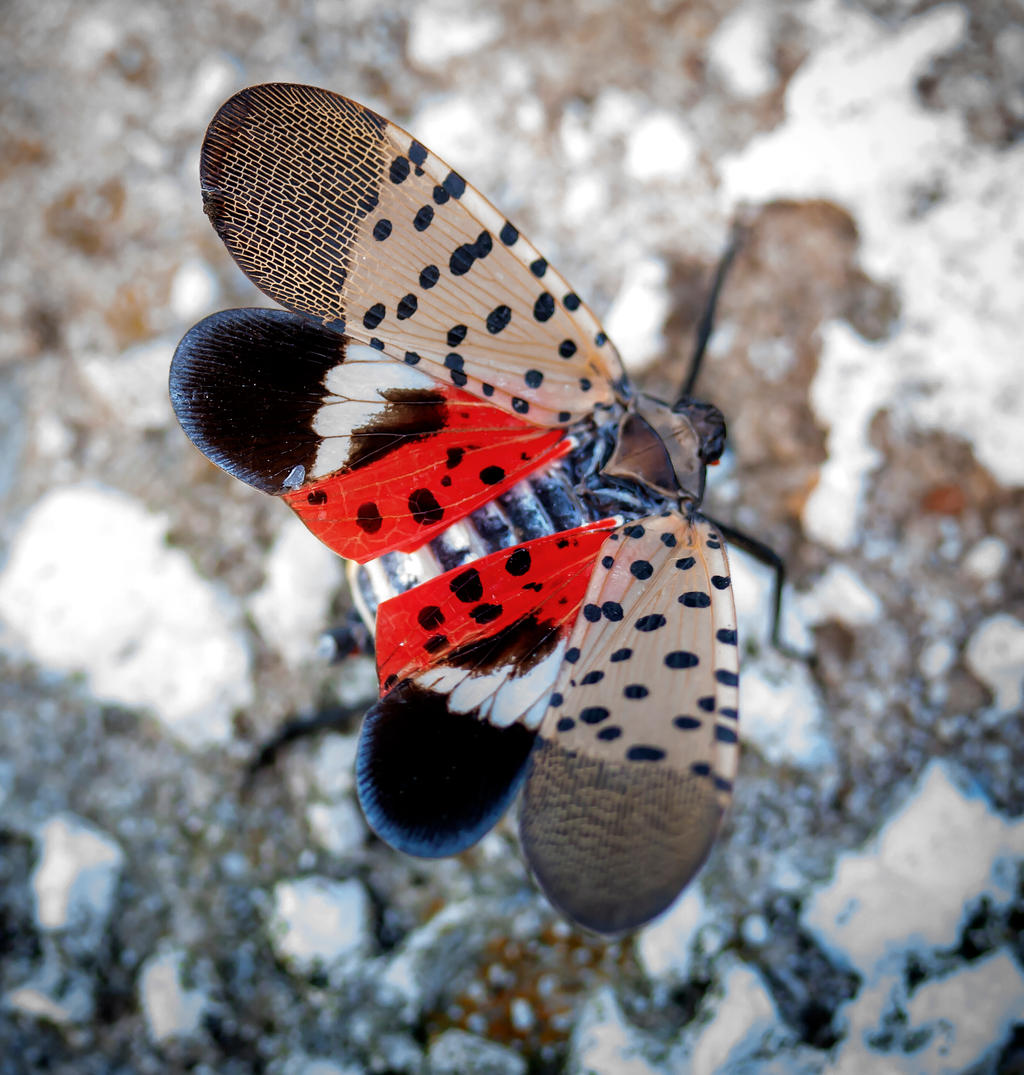
It was expected for several years – Spotted Lanternflies, Lycorma delicatula, native to East Asia, have been making their way down the east coast, and have hit the tri-cities area. These insects have a close relationship with the invasive “Tree of Heaven,” Ailanthus altissima, which is also a native of East Asia and currently sold as a fast-growing tree, rapidly invading our forests and natural areas. With such a familiar food resource readily available, the Spotted Lanternfly has had an easy time moving in.
The Tree of Heaven isn’t the only favored food of the Spotted Lanternfly. It is fond of maple trees and grapevines. Because of this, vineyards are particularly concerned about damaged crops and production.
As sap-suckers, they exude a waste product called “honeydew,” a sugary substance that attracts bees and impacts the flavor profile of the honey they produce, some describing it as “smoky.” While it’s still considered a marketable product, as spotted lanternflies spread it will be increasingly difficult for honey producers to sell an unaffected honey product.
It is highly encouraged to squish spotted lanternflies if you encounter them. One spotted lanternfly can lay 60 eggs in its lifetime – so although their numbers may seem overwhelming, any reduction in population will reduce their ability to multiply. Just like with invasive plants, we can be stewards of the environment by removing what we can, when we can, to help native species survive and keep up with the changing environment.
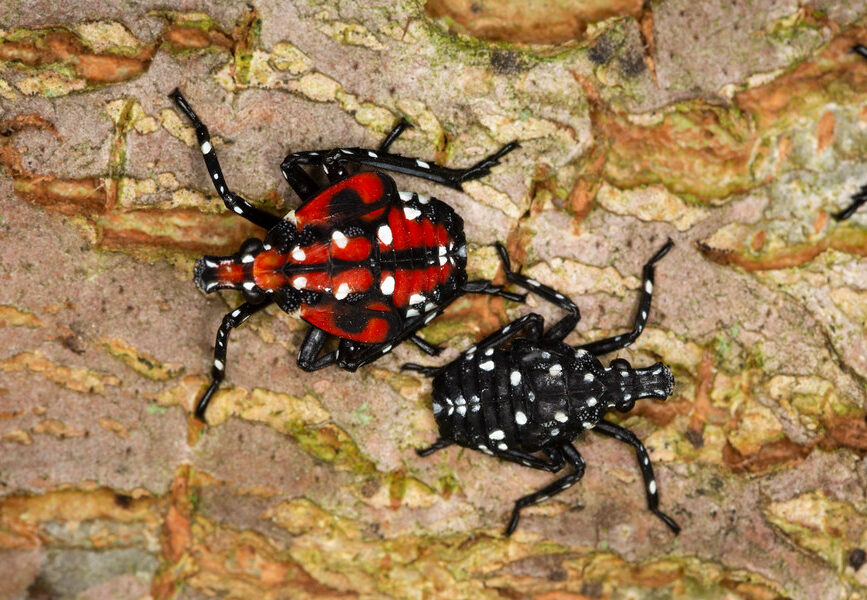
The Spotted Lanternfly has two distinct nymph stages: one black with white spots and one black and red with white spots:
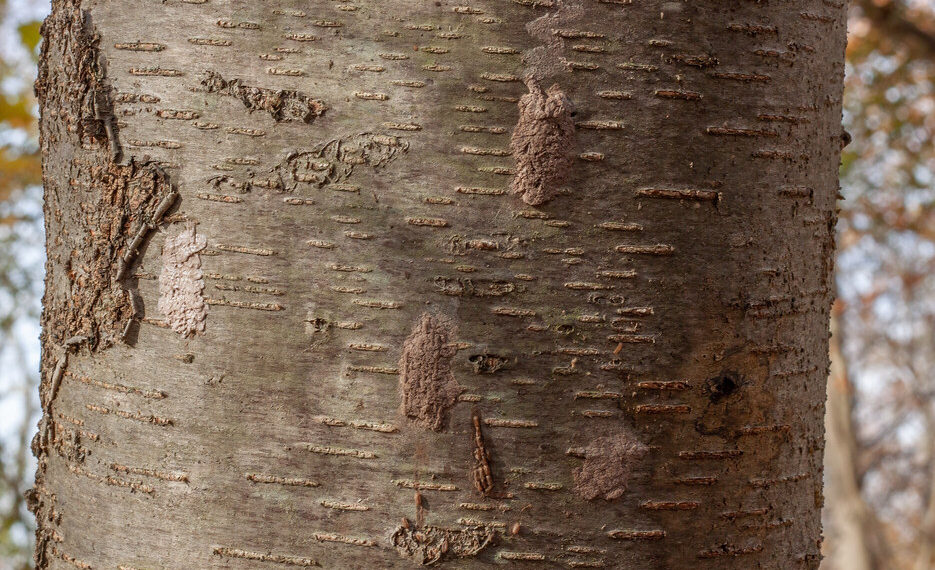
If you encounter egg masses, they are long, ovular eggs laid parallel to each other and covered with mud casing. Look for discolored splotches,
sometimes with a parallel ridge pattern, and squish them – some folks will just use the back of their nail to crush the eggs, in a pinch:
Together, we can prevent the further spread of these invasive insects and make sure our native ecosystems have a fighting chance!
PHOTO CREDITS:
Adult Spotted Lanternfly title photo: Wikimedia under Creative Commons
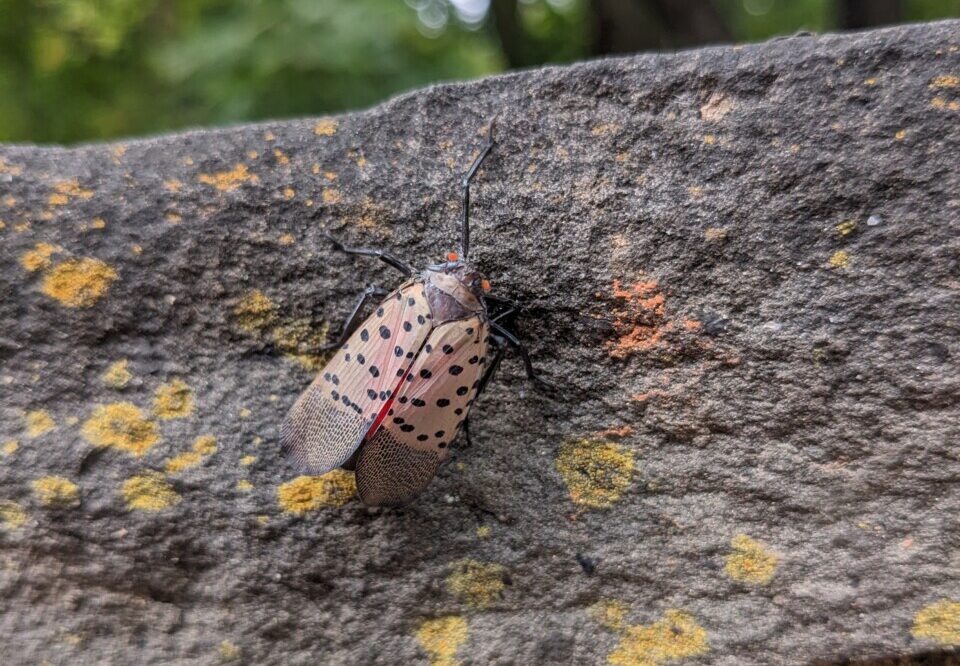
Adult Spotted Lanternfly with closed wings: Elise Neuscheler
Nymph Photo: USDA under Creative Commons via flickr.com
Egg Mass Photo: Luke Hearon under Creative Commons via flickr.com